


Clear Aligners for Adults – A Modern Orthodontic Solution for a Discreet and Healthy Smile
What are clear aligners for adults, and why is there so much interest in them?
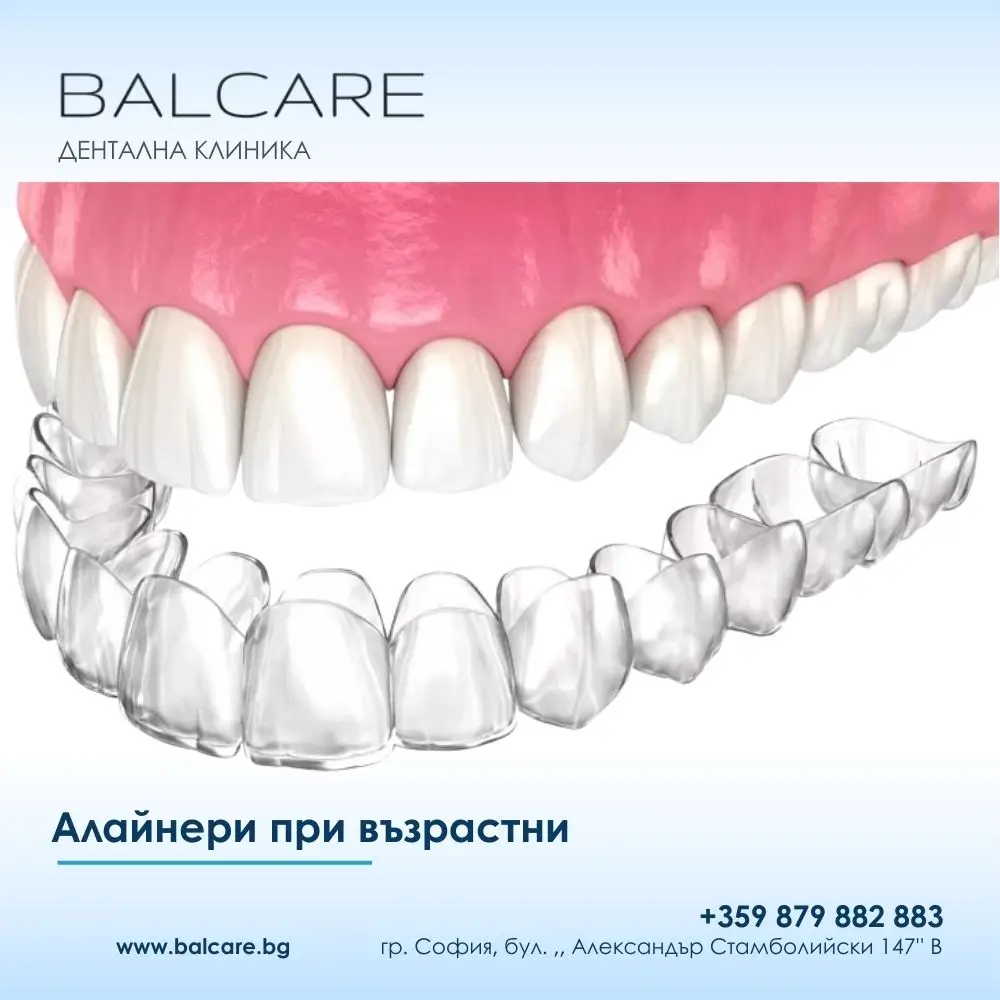
Clear aligners for adults are a modern orthodontic treatment method that combines aesthetics, comfort, and clinically established effectiveness. They are transparent, removable trays created through digital planning and 3D technology, gradually moving the teeth into the desired position.
The pressure applied to the teeth is calculated in advance using specialised digital orthodontic software and changes with each successive aligner.
Each aligner moves the teeth by approximately 0.2–0.3 mm, allowing for gradual and well-controlled movement. This progressive approach is one of the reasons treatment is generally well tolerated and associated with minimal discomfort.
More and more people over the age of 25, 35, and even 50 are choosing aligners because they want to improve their smile without visible braces and without compromising their professional or social life.
Modern orthodontics is no longer limited by age. What matters most is the biological condition of the tissues and appropriate treatment planning.
In this article, we answer the questions adult patients most commonly ask: Is treatment possible? How do aligners work? How long does treatment take? What determines the cost? What are the advantages and limitations? And when may aligners be a better choice than braces?
The aim is to provide clear, useful, and structured information that supports an informed treatment decision.
Is Orthodontic Treatment with Aligners Possible for Adults?
Yes. Orthodontic treatment with clear aligners is entirely possible in adults and is well established in clinical practice, provided that the gums and supporting bone are healthy.
Unlike in children, tooth movement in adults may sometimes occur more slowly, but it remains predictable when the correct biomechanical principles are applied.
Current research shows that bone remodelling around the teeth continues throughout life.
This means that age itself is not a contraindication. The key factors are periodontal health and compliance with the prescribed wearing schedule.
https://www.youtube.com/watch?v=xsP7N1H5xQs
Why Are Clear Aligners Particularly Suitable for Adults?
Clear aligners respond directly to the needs of adult patients because they combine functionality with discretion.
They are almost invisible, which is particularly important for people whose professional or social life involves regular face-to-face communication.
They are also removable, making eating and maintaining excellent oral hygiene easier.
Clinical observations indicate that adult patients treated with aligners may have a lower risk of tooth decay and gingival inflammation compared with patients wearing fixed orthodontic appliances.
What Problems Can Be Corrected with Clear Aligners in Adults?
Aligners can be effective for a wide range of dental and orthodontic problems, particularly mild to moderate cases.
They are commonly used for:
- crowded teeth;
- diastemas and other spaces between teeth;
- rotated teeth;
- tilted teeth;
- tooth migration following tooth loss.
In more complex cases, including pronounced skeletal discrepancies, aligners may form part of a combined treatment approach involving other orthodontic techniques.
The decision is always based on individual diagnosis.
Advantages of Clear Aligners for Adults
Clear aligners provide excellent aesthetics throughout treatment, with no visible metal components and less irritation of the soft tissues.
They allow patients to eat normally, maintain oral hygiene more easily, and in many cases require fewer orthodontic appointments.
Another important advantage is the predictability provided by digital treatment planning.
Digital technology allows precise control over each stage of tooth movement, which can be particularly valuable for adult patients with busy schedules.
Disadvantages and Limitations of Clear Aligner Treatment
The main limitation of aligner treatment is the need for a high level of patient discipline.
If the trays are not worn for the recommended number of hours, treatment may take longer or the planned result may be compromised.
In severe dental or skeletal discrepancies, aligners may not be sufficient as a stand-alone treatment and a combined approach may be required.
This is not a weakness of the method, but part of sound orthodontic decision-making.
Clear Aligners or Braces – Which Is Better for Adults?
For adult patients, clear aligners are often preferred because of their aesthetics, comfort, and easier oral hygiene.
Fixed braces remain an important and highly effective option for complex cases, although they require more intensive maintenance and adaptation.
The choice between aligners and braces should not be based on trends, but on accurate diagnosis and clearly defined treatment goals.
How Does Orthodontic Treatment in Adults Differ from Treatment in Children?
The main difference between orthodontic treatment in adults and treatment in children or teenagers is that growth has already been completed in adults.
This does not make treatment ineffective, but it means that the teeth are being moved within more mature and denser bone tissue.
For this reason, treatment of similar orthodontic problems may sometimes take slightly longer in adults than in younger patients.
When planning treatment, the orthodontist must also consider factors that are more common among adult patients.
These may include:
- existing fillings;
- missing teeth;
- worn or reshaped teeth;
- accompanying dental conditions.
Certain medications and habits such as smoking, teeth clenching or grinding, as well as abnormal tongue function, may also influence the course and final outcome of treatment.
As in children, orthodontic treatment in adults often requires coordination between the orthodontist and the general dentist.
In certain cases, other specialists may also be involved in order to achieve optimal dental health, including:
- oral surgeons;
- periodontists;
- endodontists.
This multidisciplinary approach contributes to a safer and more durable result.
How Does Orthodontic Treatment in Adults Work?
To move the teeth into an optimal position, the orthodontist uses an orthodontic appliance that applies controlled forces.
These forces are carefully calculated so that tooth movement is gradual, predictable, and as gentle as possible on the surrounding tissues.
The most commonly used orthodontic appliances in adults are fixed braces and clear aligners.
Both methods can be highly effective when selected appropriately according to the individual case and treatment goals.
For patients who are concerned about their appearance during treatment, modern orthodontics offers significantly more discreet and comfortable solutions than in the past.
Clear aligners are almost invisible, while fixed appliances may include options such as:
- ceramic braces that blend with the natural tooth colour;
- self-ligating systems with a more refined design;
- lingual braces positioned on the inner surfaces of the teeth, making them virtually invisible.
It is important to emphasise that not every orthodontic appliance is appropriate for every orthodontic problem.
Treatment should therefore be carried out by a qualified orthodontist with the experience and full range of treatment options required to select the most appropriate method.
Working with a specialist helps ensure that the chosen appliance meets the patient’s individual needs and provides a safe, effective, and stable long-term result.
How Long Does Orthodontic Treatment Take in Adults?
The duration of orthodontic treatment in adults depends on the severity and complexity of the dental and jaw-related problem, as well as the patient’s individual biological response.
A personalised treatment plan is prepared for each patient based on the condition of the teeth, bite, gums, and supporting bone.
During the initial consultation, the orthodontist can provide the most accurate estimate of the expected treatment duration.
In clinical practice, patients with mild tooth alignment problems often complete treatment within approximately 8 to 12 months.
More complex cases involving significant tooth movement or bite problems may require several years of orthodontic treatment.
During this period, follow-up appointments are generally scheduled every 6 to 8 weeks to monitor progress and make adjustments when necessary.
Although treatment requires time and consistency, it is a relatively small investment compared with the long-term benefits:
- improved dental health;
- better jaw function;
- more efficient chewing;
- easier oral hygiene;
- greater confidence in everyday life.
What Is the Cost of Clear Aligner Treatment?
The cost of clear aligner treatment is not fixed.
It depends on:
- the number of aligners required;
- the complexity of the treatment plan;
- the overall treatment duration.
In Bulgaria, clear aligner treatment generally falls within the mid-to-high range of orthodontic treatment costs, although in some cases it may remain more affordable than certain aesthetic fixed-brace options.
The exact cost can only be determined after a clinical examination and digital diagnostics because every treatment plan is individual.
Our Approach to Dental Treatment at BalCare
At BalCare Dental Clinic, our approach is structured around clear quality standards that patients can experience from the very first consultation.
The aim is to provide treatment that is planned, predictable, and carefully monitored, without unexpected changes in the middle of the process.
Our dental specialists treat complex cases on a daily basis using modern technology.
This includes adult cases involving:
- crowded teeth;
- tooth migration;
- missing teeth;
- compromised periodontal support;
- combined orthodontic and prosthodontic needs.
We continue our professional education and follow current international standards.
This is particularly important in digital orthodontics, where protocols and materials continue to evolve rapidly and accurate planning is essential for the final result.
We work with established manufacturers and follow recognised treatment protocols.
When the equipment, software, and materials are reliable, the risk of inaccuracies is reduced and treatment becomes more predictable for the patient.
Our work is based on transparency, trust, and responsibility for the patient’s health.
This means providing:
- clear explanations of the possibilities and limitations of the individual case;
- realistic treatment times;
- a structured treatment plan;
- regular follow-up examinations;
- digital monitoring of treatment progress.
What Can You Expect as a Patient at BalCare Dental Clinic?
From the beginning, you receive a clear assessment of whether clear aligners are suitable for your individual case and what needs to be done before treatment begins.
If tooth decay, dental calculus, or gingival inflammation is present, oral health is stabilised first.
Orthodontic treatment should always begin on a healthy foundation.
After digital scanning and analysis, a personalised treatment plan is created using objective clinical data.
This provides greater confidence that the planned tooth movements are appropriate and that each treatment stage follows a clear clinical rationale.
Expertise, Experience, and Technology at BalCare Dental Clinic
Expertise, experience, and technology are particularly important in adult clear aligner treatment because orthodontic therapy is long-term, requires precision, and directly affects bite function, periodontal health, and jaw function.
Medit Digital Scanner – 3D Precision Without Conventional Impressions
The Medit intraoral scanner makes it possible to create highly accurate 3D models of the teeth and bite without conventional dental impressions.
This improves patient comfort and provides a precise foundation for planning:
- clear aligners;
- veneers;
- crowns;
- different types of dental splints.
Medit eliminates the unpleasant sensation associated with traditional impression trays and materials.
This may be particularly beneficial for patients with:
- sensitivity;
- a pronounced gag reflex;
- busy schedules.
The digital model enables faster treatment planning and more accurate communication between the dentist and the dental laboratory.
This can shorten production times and facilitate subsequent adjustments when required.
KeyPrint 3D Splints – Personalised Protection for Your Bite
Splints are customised dental appliances designed to support bite stability, muscular comfort, and protection of the teeth under excessive loading.
At BalCare, they are produced using KeyPrint technology, based on digital data obtained with Medit and Teethan, to achieve highly precise adaptation.
This is particularly important for adult patients because problems such as:
- bruxism;
- teeth grinding and clenching;
- muscular tension;
- jaw pain;
- temporomandibular joint discomfort;
may occur alongside malocclusion or stress-related functional problems.
3D printing with medical-grade resin makes it possible to achieve consistent thickness, stability, and comfort during use.
The result is a splint designed to fit precisely, minimise irritation, and provide long-term functionality when properly maintained.
At BalCare Dental Clinic, we combine medical precision, new-generation technology, and high ethical standards.
This can be seen in every stage of treatment – from diagnosis and planning to the way treatment options are explained and progress is monitored.
We implement technologies used in leading dental clinics worldwide to reduce inaccuracies, improve precision, and make treatment more comfortable for the patient.
Every patient receives an individualised treatment plan based on measurable data rather than general assumptions.
We maintain a high standard of clinical reliability because in treatments such as clear aligners and occlusal splints, the most important factors are precision, consistency, and long-term care for the function and health of the bite.
Clear aligners for adults are an evidence-based, aesthetic, and functional solution for improving tooth alignment and the smile.
They meet the real needs of modern patients – discretion, effectiveness, and predictable treatment.
If you are looking for orthodontic treatment that does not compromise your appearance or lifestyle, clear aligners may be a logical and modern option that begins with a professional consultation and ends with a more confident smile.
Retention – How Is the Result Maintained After Treatment?
After the active phase of orthodontic treatment has been completed, retention is essential.
This may involve:
- a fixed lingual retainer;
- a clear removable retention tray.
Retention is key to long-term treatment success because teeth have a natural tendency to move back towards their previous positions, regardless of the patient’s age.
