


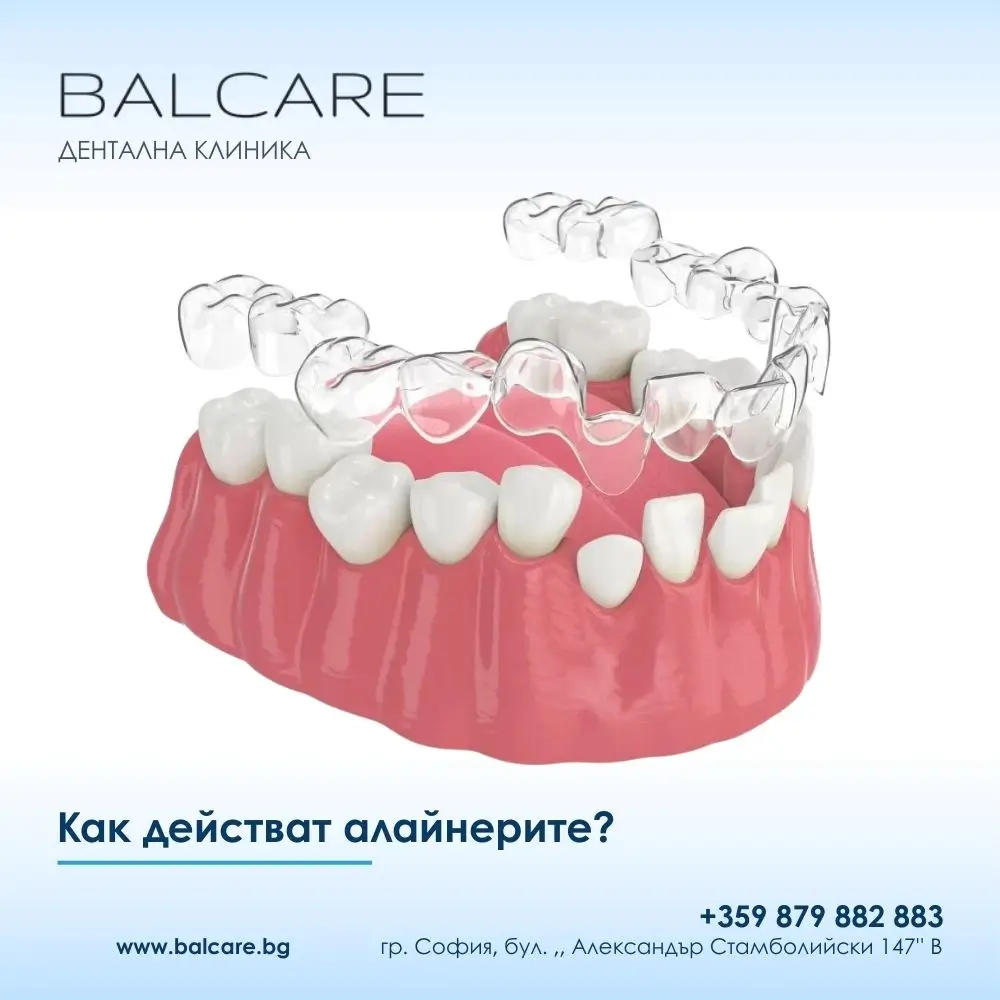
How Do Clear Aligners Work?
Misaligned teeth are not only an aesthetic concern. Malocclusions can lead to functional problems, accelerated tooth wear, gum inflammation, temporomandibular joint discomfort, and difficulties maintaining proper oral hygiene.
In recent years, treatment with clear aligners has become established as an evidence-based and minimally invasive method of orthodontic correction, particularly among adult patients.
As an orthodontist with more than ten years of clinical experience, I would like to emphasise one important point from the outset: aligners are not a cosmetic accessory. They are medical devices that require comprehensive diagnostics, digital treatment planning, and continuous professional supervision.
What Are Clear Aligners?
Aligners are thin, transparent, custom-made orthodontic trays that fit closely over the teeth.
They are manufactured from specialised medical-grade polymers and are worn according to a precisely prescribed schedule.
Their main function is to apply controlled, carefully calculated pressure to the teeth, gradually moving them into predetermined positions.
The word aligner itself refers to the process of alignment, which accurately describes their role in orthodontic treatment.
The Biological Principle: How Do Teeth Move?
Each tooth is anchored within the jawbone by the periodontal ligament – a living tissue that responds to mechanical forces.
When a constant, gentle, and properly controlled force is applied to a tooth, biological remodelling of the surrounding bone takes place.
Clear aligners use this natural biological mechanism.
Each aligner moves the teeth by a very small increment – usually approximately 0.2–0.3 mm.
This allows tooth movement to be controlled, predictable, and gentle on the roots and surrounding tissues.
Clear Aligner Treatment – Step by Step
1. Clinical and Functional Diagnosis
Treatment begins with a comprehensive orthodontic examination, evaluation of the bite, assessment of the gums and supporting bone, and radiographic diagnostics when necessary.
At this stage, the orthodontist determines whether the individual case is suitable for clear aligner therapy.
2. Digital 3D Treatment Planning
An intraoral scanner or highly accurate dental impressions are used to create a digital model of the teeth.
Specialised software allows every stage of tooth movement to be planned – from the initial position to the intended final result.
The patient can view a digital simulation of the treatment before the active phase begins.
3. Production of Custom Aligners
Based on the digital treatment plan, a series of sequential aligners is produced.
Each new tray has a slightly modified shape designed to guide the teeth towards the next planned position.
4. Wearing the Aligners and Follow-Up
Aligners are usually worn for 20–22 hours per day and removed only for eating and oral hygiene.
Follow-up appointments are generally scheduled every 6–8 weeks to monitor progress and make adjustments when necessary.
How Long Does Clear Aligner Treatment Take?
Treatment duration depends on the complexity of the case, the patient’s biological response, and compliance with the recommended wearing schedule.
| Case Complexity | Average Treatment Duration |
|---|---|
| Mild corrections | 3–6 months |
| Moderate complexity | 6–12 months |
| Complex cases | 12–24 months |
What Dental Problems Can Be Treated with Aligners?
Clear aligners can be effective for the treatment of:
- crowded teeth;
- gaps between teeth;
- tilted teeth;
- rotated teeth;
- crossbite;
- certain cases of open bite.
When appropriately indicated, more than 70–80% of adult patients may be successfully treated with clear aligners.
Limitations and Contraindications
Clear aligners are not a universal solution.
They may not be appropriate in cases involving:
- severe skeletal discrepancies;
- significant vertical bite problems;
- active periodontal disease;
- uncontrolled bruxism;
- cases requiring orthognathic surgery.
An honest assessment of these limitations is an essential part of professional orthodontic practice.
Attachments and Auxiliary Components – Why Are They Needed?
In many cases, small composite elements known as attachments are bonded to the teeth.
They act as anchorage points that allow the aligners to achieve more complex movements, including:
- rotations;
- uprighting tilted teeth;
- improved control of tooth roots.
In some cases, treatment may also be supported by additional orthodontic components such as:
- temporary anchorage devices or mini-implants;
- springs;
- transpalatal arches.
These auxiliary elements can support more complex orthodontic movements without compromising the overall aesthetic advantages of aligner treatment.
Clear Aligners or Braces?
| Criterion | Clear Aligners | Fixed Braces |
|---|---|---|
| Aesthetics | Almost invisible | Visible |
| Oral hygiene | Easier to maintain | More challenging |
| Comfort | High | Generally lower |
| Patient compliance | Highly dependent on discipline | Less dependent on patient compliance |
| Complex tooth movements | May require auxiliary elements | Often easier to achieve |
Possible Risks and Side Effects
Even when treatment is properly planned and carried out, some temporary effects may occur:
- temporary tooth sensitivity;
- mild changes in speech at the beginning of treatment;
- tension or pressure in the jaw;
- risk of relapse if retention is not followed.
These effects are generally temporary and manageable.
What Happens If the Recommended Wearing Schedule Is Not Followed?
Failure to wear the aligners as prescribed may result in:
- loss of control over the planned tooth movements;
- prolonged treatment time;
- the need for new digital planning;
- additional treatment costs.
Patient compliance is one of the key factors determining the success of aligner treatment.
Care and Hygiene of Clear Aligners
Aligners should be cleaned with a soft brush and water.
Abrasive toothpastes are not recommended because they may scratch the material and make the trays appear cloudy.
Special aligner-cleaning tablets may be used when necessary.
Whenever the aligners are removed, they should be stored in a protective case.
Retention – The Essential Final Stage of Treatment
After the active phase of orthodontic treatment, a retainer must be used.
The retainer stabilises the achieved result and helps prevent the teeth from moving back towards their original positions.
Retention is an essential and inseparable part of orthodontic treatment.
Clear aligners are a high-tech, effective, and minimally invasive orthodontic solution when they are properly indicated, professionally planned, and worn according to instructions.
They can provide predictable results, excellent aesthetics, and a high level of comfort, but successful treatment requires expert supervision and patient cooperation.
A straight smile is not only about appearance – it is an important part of overall dental and functional health.
