


Pulpitis in Baby Teeth
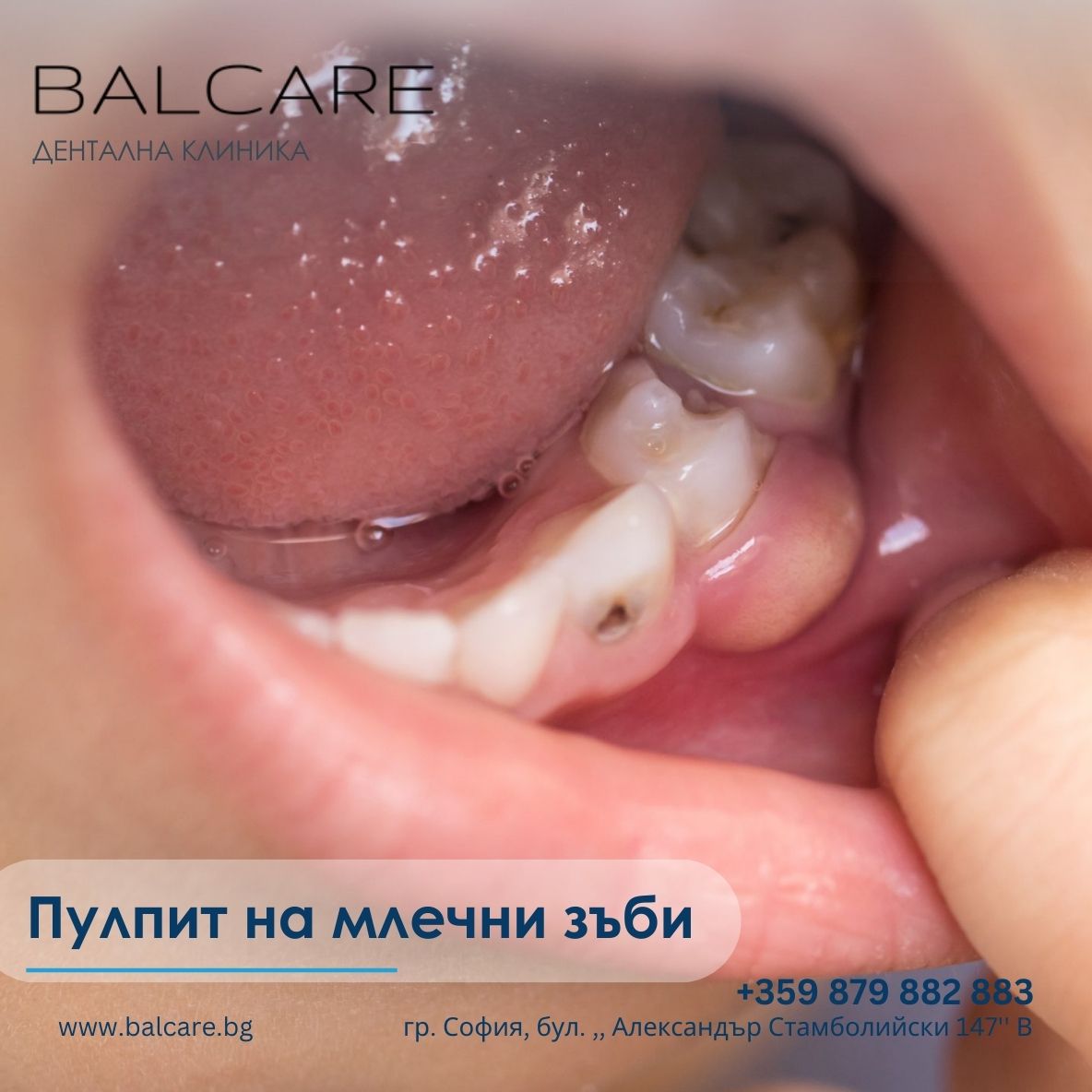
Pulpitis in Baby Teeth: Symptoms, Treatment and Prevention
What Is Pulpitis in Baby Teeth?
Pulpitis in baby teeth is inflammation of the dental pulp – the soft inner tissue of the tooth that contains nerves and blood vessels. It most commonly develops as a complication of untreated deep tooth decay in children. When bacteria reach the pulp chamber, they trigger an inflammatory process that may be acute or chronic.
Primary (baby) teeth are more susceptible to the rapid progression of dental caries because of their anatomical structure, including thinner enamel and dentine. This is why pulpitis in baby teeth is relatively common in childhood and requires timely diagnosis and treatment.
What Causes Pulpitis in Children?
The most common cause of pulpitis in a baby tooth is untreated dental caries.
When the carious lesion progresses deeply enough to affect the pulp, bacteria can cause inflammation and pain.
Other possible causes include:
- trauma to a baby tooth, such as a blow or fracture;
- thermal irritation;
- extensive destruction of the tooth structure.
Types of Pulpitis in Baby Teeth
Depending on how the condition develops, pulpitis in primary teeth may be classified as:
- Acute pulpitis – develops suddenly and may cause intense pain, often becoming more noticeable at night.
- Chronic pulpitis – progresses more slowly and may sometimes cause few or no obvious symptoms.
Pulpitis may also be described according to the extent and nature of the inflammation:
- Serous pulpitis – an early inflammatory stage;
- Suppurative pulpitis – inflammation associated with purulent infection;
- Total pulpitis – inflammation involving the entire pulp, including the root portion;
- Partial pulpitis – inflammation affecting mainly the coronal pulp.
Symptoms of Pulpitis in Baby Teeth
Recognising the symptoms of pulpitis in children is important because early treatment can help prevent pain and further complications.
Common signs may include:
- severe or sudden toothache, particularly at night;
- pain while eating or chewing;
- sensitivity or pain triggered by hot or cold foods and drinks;
- swelling of the gum or cheek;
- redness and tenderness around the affected tooth;
- fever in cases of more advanced infection;
- visible inflamed tissue within a severely damaged tooth in some cases.
Pulpitis in children can occasionally progress with relatively little pain and may be discovered during a routine dental examination.
This does not mean that the condition is harmless. Chronic pulp inflammation can progress and affect the tissues surrounding the tooth.
How Is Pulpitis Diagnosed in Children?
Diagnosis of pulpitis in a baby tooth is performed by a paediatric dentist and may include:
- a clinical examination;
- discussion of the child’s symptoms and history of pain;
- dental X-rays to assess the depth of the decay and the surrounding tissues.
Timely diagnosis is important because untreated pulpal inflammation may progress to periodontitis or potentially affect the developing permanent tooth.
How Is Pulpitis in Baby Teeth Treated?
The aim of treating pulpitis in primary teeth is to control the inflammation, relieve discomfort, and preserve the tooth until its natural time of replacement whenever clinically possible.
The treatment method depends on how extensively the dental pulp has been affected.
Vital Pulp Treatment
When only part of the pulp is affected and the remaining tissue can be preserved, a vital pulp treatment may be performed.
One possible procedure is a pulpotomy.
During a pulpotomy, the affected coronal portion of the pulp is removed while the healthy pulp tissue within the roots is preserved and treated appropriately.
The objective is to maintain the primary tooth in a functional and comfortable condition until it is naturally replaced.
Treatment When the Entire Pulp Is Affected
When the pulp is extensively inflamed or infected, more comprehensive pulp treatment may be necessary.
Depending on the condition of the tooth and its roots, treatment may involve removal of the affected pulp tissue, cleaning and disinfection of the canals, and placement of an appropriate material.
Stage 1: Anaesthesia and Initial Treatment
Local anaesthesia is used when necessary to make the procedure comfortable for the child.
The affected tooth is opened and the condition of the pulp is assessed.
Stage 2: Removal of Affected Pulp Tissue
The inflamed or infected pulp tissue is removed and the internal part of the tooth is carefully cleaned and disinfected.
The exact technique depends on the type of primary tooth, the degree of inflammation, and the stage of root development and resorption.
Stage 3: Medication and Canal Treatment
Appropriate medicaments or filling materials may be placed within the treated tooth according to the selected paediatric endodontic technique.
The treatment must take into account the presence and development of the permanent tooth underneath.
Stage 4: Restoration of the Baby Tooth
After pulp treatment, the primary tooth needs to be properly restored.
Depending on the amount of remaining tooth structure, this may involve:
- a tooth-coloured filling;
- glass ionomer cement;
- another suitable paediatric restorative material;
- a paediatric crown when the tooth has been extensively damaged.
In some dental practices, colourful fillings may also be offered to make treatment more engaging for children.
How Long Does Treatment Take?
The duration depends on the severity of the condition, the type of treatment required, and the child’s ability to cooperate.
Some procedures can be completed during a single appointment, while more complex cases may require additional visits.
When swelling, an abscess, or spreading infection is present, the dentist will determine whether additional medical treatment is required.
Is the “Nerve” Removed from a Baby Tooth?
Sometimes, but the amount of pulp tissue removed depends on the diagnosis.
With a pulpotomy, only the diseased pulp from the crown of the tooth is removed while healthy tissue within the roots is preserved.
When the entire pulp is irreversibly affected, a more extensive procedure such as a pulpectomy may be required.
The decision is based on:
- the condition of the pulp;
- the presence of infection;
- the amount of remaining tooth structure;
- the stage of root resorption;
- how soon the tooth is expected to fall out naturally;
- the condition of the developing permanent tooth.
Possible Complications of Untreated Pulpitis in Baby Teeth
If pulpitis is not treated, the inflammation or infection may spread beyond the tooth.
Possible complications include:
- periodontitis affecting a primary tooth – inflammation of the tissues surrounding the root;
- dental abscess;
- swelling of the gum or face;
- inflammation of the surrounding tissues;
- possible effects on the developing permanent tooth;
- premature loss of the primary tooth;
- systemic complications in advanced infections.
An infection close to a developing permanent tooth may, in some cases, affect its development and result in enamel defects, changes in shape, or discolouration.
How Can Pulpitis in Children Be Prevented?
Prevention begins with protecting baby teeth from dental caries.
Important measures include:
- regular examinations by a paediatric dentist;
- good oral hygiene from an early age;
- brushing twice daily with age-appropriate fluoride toothpaste;
- limiting sugary foods and drinks;
- avoiding frequent sugar-containing snacks;
- treating dental caries at an early stage;
- seeking dental care promptly if the child complains of pain or sensitivity.
Regular preventive examinations make it possible to detect cavities before they progress deeply enough to affect the dental pulp.
When Should Parents Contact a Paediatric Dentist?
Arrange a dental examination if your child:
- complains of persistent toothache;
- wakes at night because of dental pain;
- experiences pain when eating;
- avoids chewing on one side;
- develops swelling around a tooth;
- has swelling of the cheek or face;
- has a severely decayed or broken baby tooth;
- develops fever together with dental swelling or pain.
Even mild symptoms should not automatically be dismissed because pulp disease in primary teeth can sometimes progress rapidly.
Why Is Timely Treatment So Important?
Pulpitis in baby teeth is a common but potentially serious dental condition in childhood.
Timely treatment can:
- relieve pain;
- control infection;
- preserve the baby tooth whenever possible;
- maintain space for the permanent tooth;
- support normal chewing and speech;
- reduce the risk of complications affecting the developing permanent dentition.
Parents should therefore never assume that toothache in a baby tooth can simply be ignored because the tooth will eventually fall out.
Pain in a primary tooth may be a sign of pulp inflammation and should be evaluated by a paediatric dentist.
At BalCare Dental Clinic, our paediatric dental team provides individual care for children with dental caries, pulpitis, and other conditions affecting primary teeth.
Our approach focuses on:
- individual treatment for every child;
- gentle and age-appropriate dental care;
- reducing stress and anxiety during treatment;
- preserving primary teeth whenever clinically appropriate;
- protecting the health and development of the permanent teeth.
Book an appointment and help protect your child’s smile with timely diagnosis, prevention, and appropriate treatment.
BalCare Dental Clinic – where every healthy smile begins with care.
