


Progression of Periodontal Disease
Progression of Periodontal Disease – Symptoms, Stages, and Why Early Prevention Is So Important
Periodontal diseases are chronic inflammatory conditions that affect the gums and the bone surrounding the teeth. They begin with gingivitis and may gradually progress to periodontitis, which can lead to tooth mobility and tooth loss if timely treatment is not provided.
Periodontal diseases are among the most common chronic conditions worldwide and affect millions of people across all age groups. In their early stages, they often progress with very few noticeable symptoms, which is one of the main reasons many patients seek professional help too late.
The condition usually begins with inflammation of the gums, known as gingivitis. If it is not treated in time, the inflammation may gradually spread to the deeper tissues and bone that support the teeth. This condition is known as periodontitis and may eventually lead to tooth mobility and tooth loss.
According to the World Health Organization, severe forms of periodontitis affect nearly 19% of the global adult population. Data also show that periodontal diseases are among the leading causes of natural tooth loss in adults.
What Are Periodontal Diseases?
Periodontal diseases are inflammatory conditions that affect the tissues surrounding the teeth – the gums, periodontal ligament, and supporting bone.
The main cause of their development is the accumulation of bacterial plaque and dental calculus.
When plaque is not effectively removed through proper oral hygiene, bacteria begin to irritate the gums and trigger inflammation.
In the early stage, the process is reversible. However, without treatment, the supporting structures around the teeth may gradually become damaged.
More than 50% of people over the age of 30 have some form of periodontal disease. Among smokers, the risk of developing severe periodontitis may be up to three times higher.
Main Risk Factors
- inadequate oral hygiene;
- smoking;
- diabetes;
- genetic predisposition;
- stress;
- hormonal changes;
- a weakened immune system.
How Does Periodontal Disease Begin?
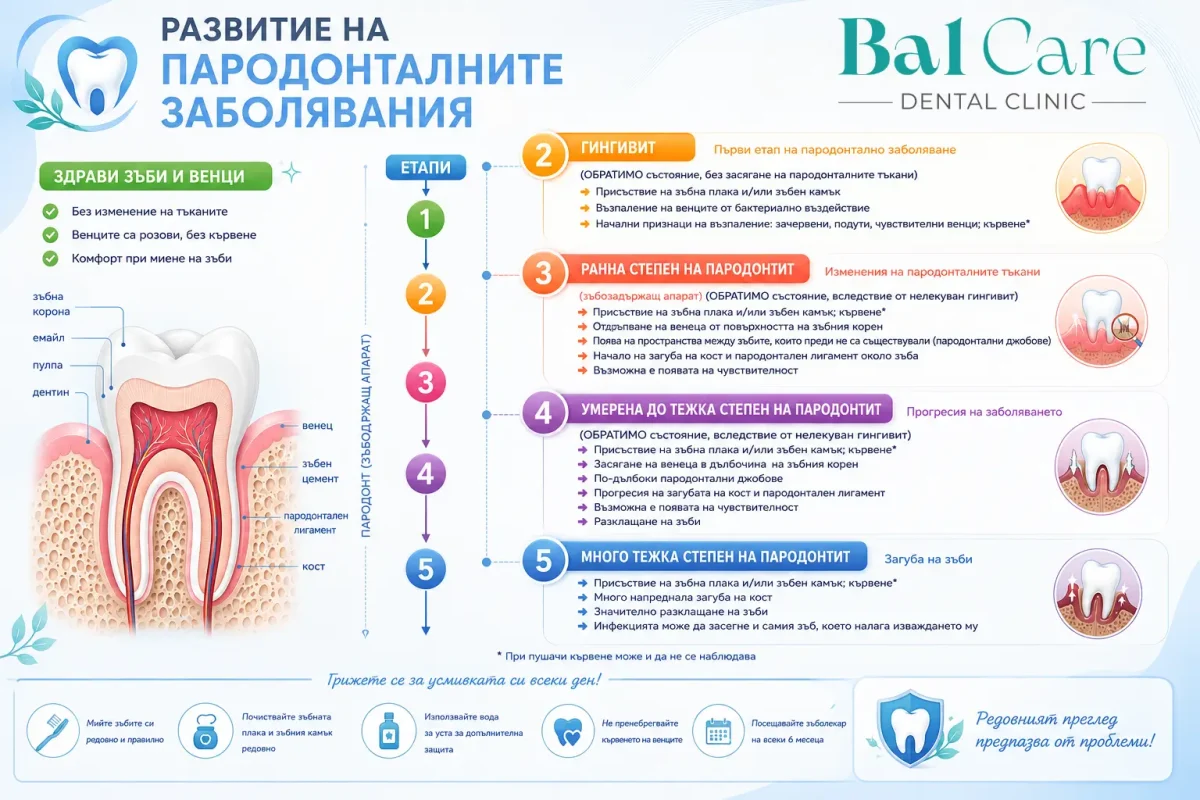
The progression of periodontal disease occurs through several main stages.
Each stage is characterised by different symptoms and changes in the tissues surrounding the teeth.
Healthy Gums and Teeth
In a healthy mouth, the gums are pale pink, firm, and do not bleed.
There is no inflammation, and the bone and tissues surrounding the teeth remain stable.
Patients usually experience no discomfort or sensitivity, and brushing does not cause pain or bleeding.
Regular preventive care and good oral hygiene are the main factors in maintaining this healthy condition over the long term.
Gingivitis – The First Stage of Periodontal Disease
Gingivitis is the earliest form of periodontal disease.
It is an inflammation of the gums caused by bacterial plaque.
This stage is reversible, which means that with appropriate treatment and good oral hygiene, the gums can fully return to a healthy condition.
The Most Common Symptoms of Gingivitis Include:
- red gums;
- swelling;
- bleeding when brushing the teeth;
- sensitivity;
- bad breath.
Many people ignore these symptoms because severe pain is usually absent.
This is precisely what can allow the condition to progress unnoticed.
Studies published in the Journal of Clinical Periodontology indicate that untreated gingivitis significantly increases the risk of developing periodontitis in the following years.
Early Periodontitis – The Beginning of Tissue Damage
When inflammation persists for a prolonged period, bacteria begin to penetrate deeper below the gum line.
Gradually, so-called periodontal pockets begin to form.
This marks the beginning of periodontitis – a chronic condition in which the structures supporting the teeth are already affected.
Symptoms of Early Periodontitis
- gum recession;
- sensitivity to hot and cold;
- development of periodontal pockets;
- early bone loss;
- increased gum bleeding.
Although the process has already reached the deeper tissues, early treatment can significantly slow the progression of the disease and help preserve the teeth for many years.
Moderate to Severe Periodontitis
As the condition progresses, bone loss becomes more pronounced.
The gums continue to recede, while the teeth gradually lose stability.
Most Common Symptoms
- loose teeth;
- pain when chewing;
- persistent bad breath;
- accumulation of dental calculus;
- exposed tooth roots.
At this stage, treatment becomes more complex and often requires a combined approach, including professional cleaning, periodontal therapy, medication, and, in some cases, surgical procedures.
Very Severe Periodontitis and Tooth Loss
In the most advanced stage, the bone surrounding the teeth may be severely damaged.
The teeth become unstable and may begin to shift position or eventually be lost.
In some cases, the infection may reach the tooth roots and surrounding tissues, making extraction of the affected teeth necessary.
In addition to being a functional problem, tooth loss can affect:
- speech;
- eating;
- self-confidence;
- quality of life.
How Can Periodontal Disease Affect Overall Health?
Modern medicine does not consider periodontal disease to be only a local problem affecting the mouth.
Chronic inflammation may influence the body as a whole.
Scientific studies have associated periodontitis with:
- cardiovascular disease;
- diabetes;
- pregnancy complications;
- respiratory infections;
- chronic inflammatory conditions.
Bacteria and inflammatory mediators may enter the bloodstream and potentially affect different organs and systems.
How Can We Protect Our Gums and Teeth?
Prevention is the most effective way to reduce the risk of periodontal disease.
Dental Professionals Recommend:
- brushing the teeth at least twice a day;
- using dental floss or interdental brushes;
- professional removal of dental calculus;
- preventive dental examinations every 6 months;
- reducing or avoiding smoking;
- maintaining good control of systemic conditions such as diabetes.
Regular dental examinations allow periodontal problems to be detected at an early stage, before severe symptoms and irreversible damage develop.
Why Is Early Diagnosis So Important?
In their early stages, periodontal diseases can be successfully controlled and treated.
The earlier a problem is identified, the greater the chance of preserving the natural teeth.
Many patients seek professional help only after they notice tooth mobility, but by that stage the disease is often already advanced.
Early prevention, good oral hygiene, and regular dental visits are key to maintaining healthy gums and a long-lasting smile.
Frequently Asked Questions
Can Gingivitis Be Treated?
Yes.
Gingivitis is a reversible condition when it is detected early and managed with appropriate home care, professional cleaning, and effective plaque control.
Is Bleeding from the Gums Normal?
No.
Bleeding is most commonly a sign of inflammation and should not be ignored, even when there is no pain.
Can Periodontitis Lead to Tooth Loss?
Yes.
In advanced periodontitis, the bone surrounding the teeth is progressively destroyed, which may lead to tooth mobility and eventual tooth loss.
How Often Should I Have a Preventive Dental Examination?
A preventive dental check-up is recommended at least once every 6 months.
Book an Appointment for a Preventive Dental Examination
Early detection of periodontal disease can help prevent serious complications and tooth loss.
Regular preventive examinations and professional dental hygiene are among the best ways to protect the health of your gums and maintain your smile.
If you experience bleeding gums, sensitivity, or persistent bad breath, do not postpone a consultation with a dental professional.
This article was prepared with the participation of periodontal specialists at BalCare Dental Clinic and is based on current scientific publications and international recommendations.
Last updated: 2025
Scientific Sources
- World Health Organization (WHO) – Oral Health Fact Sheets
- Tonetti MS, Greenwell H, Kornman KS. Staging and grading of periodontitis: Framework and proposal of a new classification. Journal of Periodontology, 2018.
- Papapanou PN et al. Periodontitis: Consensus report of workgroup 2 of the 2017 World Workshop. Journal of Clinical Periodontology, 2018.
- Nazir MA. Prevalence of periodontal disease and association with systemic diseases. International Journal of Health Sciences, 2017.
- Kinane DF, Stathopoulou PG, Papapanou PN. Periodontal diseases. Nature Reviews Disease Primers, 2017.
