


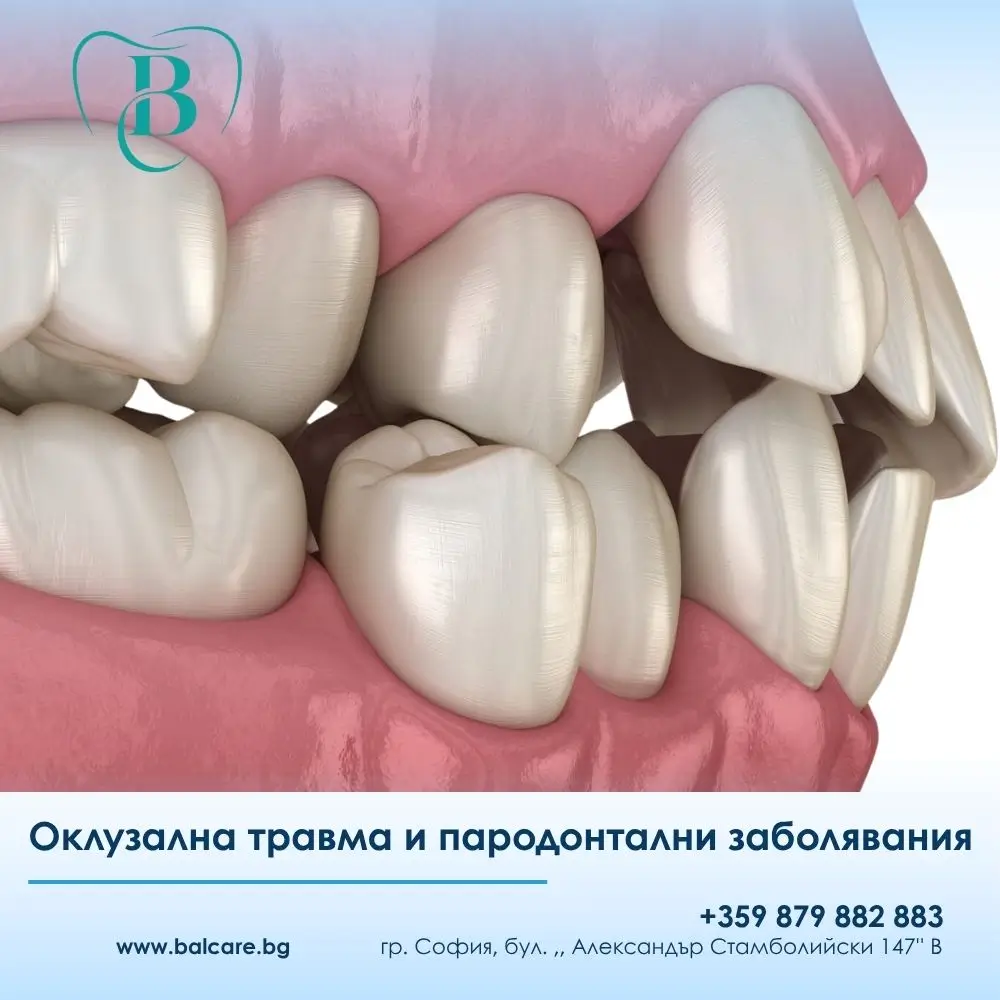
Occlusal Trauma and Periodontal Disease
Occlusal trauma remains one of the most underestimated factors contributing to accelerated loss of periodontal support, even though modern gnathology and periodontology increasingly recognise occlusion as an important modifying factor in chronic inflammatory conditions.
In everyday clinical practice, patients are often treated for periodontitis without analysing the actual cause of excessive loading on individual teeth, muscles, and the temporomandibular joints.
As a clinician with many years of experience in the field of gnathology, I can state that stable occlusion is a fundamental component of functional oral health.
When occlusal forces are distributed incorrectly, microtrauma may occur in the periodontal ligament, together with bone compression, tooth mobility, abfraction lesions, muscular hyperactivity, and accelerated bone resorption.
These processes are not always the primary cause of periodontal disease, but they frequently contribute to its progression.
A modern approach requires a comprehensive assessment of the patient – not only measurement of periodontal pockets and bleeding, but also evaluation of centric relation, maximum intercuspation, occlusal interferences, bruxism, and functional movements of the mandible.
This is where gnathology becomes a critically important component of periodontal diagnosis.
What Is the Relationship Between Occlusal Trauma and Periodontal Disease?
Occlusal trauma refers to damage to the supporting structures of a tooth caused by excessive or improperly directed occlusal forces.
The periodontal ligament, alveolar bone, cementum, and even the temporomandibular joint may be affected.
Periodontal disease, on the other hand, is an inflammatory process primarily induced by bacterial biofilm.
However, when traumatic occlusal forces are added to the inflammatory process, tissue destruction may progress more rapidly.
Clinical observations indicate that teeth affected by active periodontitis and simultaneous occlusal overload may demonstrate:
- deeper periodontal pockets;
- accelerated bone loss;
- increased tooth mobility;
- furcation defects;
- pathological tooth migration;
- a less favourable treatment prognosis.
In gnathology, occlusal trauma is not considered an independent cause of periodontitis, but rather a significant co-factor that alters the biomechanics of the masticatory system and compromises the ability of the periodontium to adapt to functional loading.
What Is Normal Occlusion?
Normal occlusion is a condition in which the teeth come into contact harmoniously, the muscles function without hyperactivity, and the temporomandibular joints remain stable and symmetrical.
Physiological occlusion provides:
- efficient chewing;
- balanced distribution of forces;
- joint stability;
- protection of the periodontium;
- minimal muscular tension.
In ideal occlusion, maximum intercuspation should coincide with centric relation.
This means that the condyles are positioned stably within the joint fossae while the teeth come into contact without premature interferences.
Any disturbance of this balance may lead to functional overload.
What Is Malocclusion and Why Is It a Risk Factor?
Malocclusion refers to an abnormal relationship between the upper and lower dental arches.
It may be skeletal, dental, or functional.
Statistical data indicate that more than 60% of adults have at least one form of malocclusion. This helps explain why occlusal dysfunction is so common in the modern population.
The most common risk factors include:
- missing teeth;
- improperly shaped fillings or crowns;
- orthodontic relapse;
- bruxism;
- pathological tooth migration;
- loss of vertical dimension;
- asymmetrical chewing function.
When occlusion is unstable, the muscles begin to compensate.
This may result in chronic overloading of specific teeth and gradual deterioration of their supporting structures.
Primary and Secondary Occlusal Trauma
Primary Occlusal Trauma
Primary occlusal trauma occurs when the periodontium is healthy but the forces acting on the tooth are excessive.
It is most commonly observed following:
- a high filling;
- an incorrectly adjusted crown;
- a new dental bridge;
- orthodontic imbalance.
The periodontal tissues are initially healthy but are unable to tolerate the abnormal functional load.
Secondary Occlusal Trauma
In secondary occlusal trauma, the forces may even be within a normal range, but the supporting tissues have already been compromised by periodontal attachment and bone loss.
This is particularly common in patients with moderate to severe periodontitis, where reduced bone support significantly decreases the adaptive capacity of the affected teeth.
In such cases, inflammation should first be brought under control, followed by appropriate occlusal therapy.
How Is a Gnathological Occlusal Analysis Performed?
A comprehensive occlusal analysis is an essential component of modern diagnostics.
It begins with observation of the patient’s face, profile, and muscle tone.
Centric Relation Analysis
Centric relation is a joint position that is independent of tooth contact.
It represents a stable orthopaedic position of the mandible.
A discrepancy between centric relation and maximum intercuspation may be associated with:
- muscle spasm;
- joint symptoms;
- occlusal interferences;
- traumatic contacts.
Analysis of Lateral Movements
During physiological function, the canine teeth should guide lateral movements of the mandible.
This is known as canine guidance.
When the posterior teeth remain in contact during lateral movements, occlusal interferences occur.
These may significantly increase the activity of the masticatory muscles and the occlusal load.
How Does Bruxism Affect the Periodontium?
Bruxism is one of the most common parafunctional activities.
It may occur during the day or at night and can remain undiagnosed for many years.
Chronic bruxism may be associated with:
- occlusal wear facets;
- enamel cracks;
- abfraction lesions;
- muscle pain;
- masseter hypertrophy;
- tooth mobility;
- tooth sensitivity;
- cervical defects.
Smooth, polished wear facets on the occlusal surfaces are particularly characteristic signs of active parafunction.
Modern digital scanners and T-Scan systems make it possible to evaluate contact points and the distribution of occlusal forces with a high degree of precision in real time.
Clinical Signs of Occlusal Trauma
Occlusal trauma may present with specific clinical and radiographic findings.
Clinical Symptoms
Patients may report:
- a sensation that a tooth feels “high”;
- pain when chewing;
- muscle fatigue;
- morning jaw tension;
- sensitivity to cold;
- headaches;
- joint noises.
Clinical examination may reveal:
- tooth mobility;
- fremitus;
- pathological tooth migration;
- tooth wear;
- fractures;
- gingival recession;
- muscle tenderness.
Radiographic Signs
Radiographic examination may demonstrate:
- widening of the periodontal ligament space;
- thickening of the lamina dura;
- vertical bone defects;
- asymmetrical bone loss;
- root resorption;
- furcation involvement.
Vertical bone loss is frequently associated with a combination of inflammation and traumatic occlusal forces.
What Is Fremitus?
Fremitus is the vibration or movement of a tooth during occlusal contact.
It is an important diagnostic finding in gnathology.
The examination is performed by placing a finger on the facial surface of the upper teeth while the patient repeatedly closes into maximum intercuspation.
Positive fremitus may indicate:
- premature contact;
- excessive loading;
- unstable occlusion;
- muscular imbalance.
What Are the Modern Treatment Methods?
Occlusal Equilibration
Occlusal equilibration involves selective adjustment of tooth contacts through minimal reshaping.
The aim is to achieve:
- more balanced distribution of forces;
- elimination of occlusal interferences;
- stabilisation of the temporomandibular joints;
- reduction of muscular tension.
When properly performed, occlusal equilibration may significantly improve the periodontal prognosis.
Occlusal Splints
Occlusal splints are an important tool in gnathological therapy.
They may:
- reduce muscular tension;
- help control the effects of bruxism;
- stabilise the temporomandibular joint;
- protect the teeth;
- reduce traumatic loading.
Patients who use occlusal splints may have a lower risk of further dental damage when parafunctional activity is present.
Orthodontic Treatment
In cases of severe malocclusion, orthodontic treatment may be required to achieve stable occlusal relationships.
Without functional stability, even an excellent aesthetic result may remain compromised.
Comprehensive Gnathological Rehabilitation
In more complex cases, treatment may involve:
- increasing the vertical dimension of occlusion;
- full-mouth occlusal reconstruction;
- prosthodontic rehabilitation;
- treatment of temporomandibular joint disorders;
- myofunctional therapy.
The Relationship Between Occlusion and Temporomandibular Disorders
Temporomandibular disorders may coexist with occlusal instability.
Patients may experience:
- clicking;
- crepitus;
- restricted mouth opening;
- joint pain;
- mandibular deviation.
Although occlusion is not the only cause of temporomandibular disorders, it may represent an important biomechanical factor.
Occlusion, Masticatory Function, and General Health
Current research has explored relationships between occlusal function, nutrition, and cognitive health.
Reduced masticatory efficiency may be associated with:
- restricted dietary intake;
- nutritional deficiencies;
- sarcopenia;
- reduced cognitive performance in older adults.
Patients with preserved posterior occlusal contacts and a stable bite generally demonstrate better chewing efficiency and a higher quality of life.
Occlusal trauma should not be considered in isolation but as part of the complex biomechanical system of the masticatory apparatus.
In modern gnathology, successful management of periodontal disease requires consideration not only of inflammation but also of occlusion, muscle function, and temporomandibular joint stability.
A mobile tooth is not necessarily the result of inflammation alone.
In some cases, chronic functional overload may also contribute and may remain undiagnosed for many years.
A comprehensive approach – periodontal, gnathological, prosthodontic, and functional – is essential for long-term stability.
For this reason, occlusal assessment should be considered an important component of a comprehensive modern dental examination.
