


Dental Implant Removal
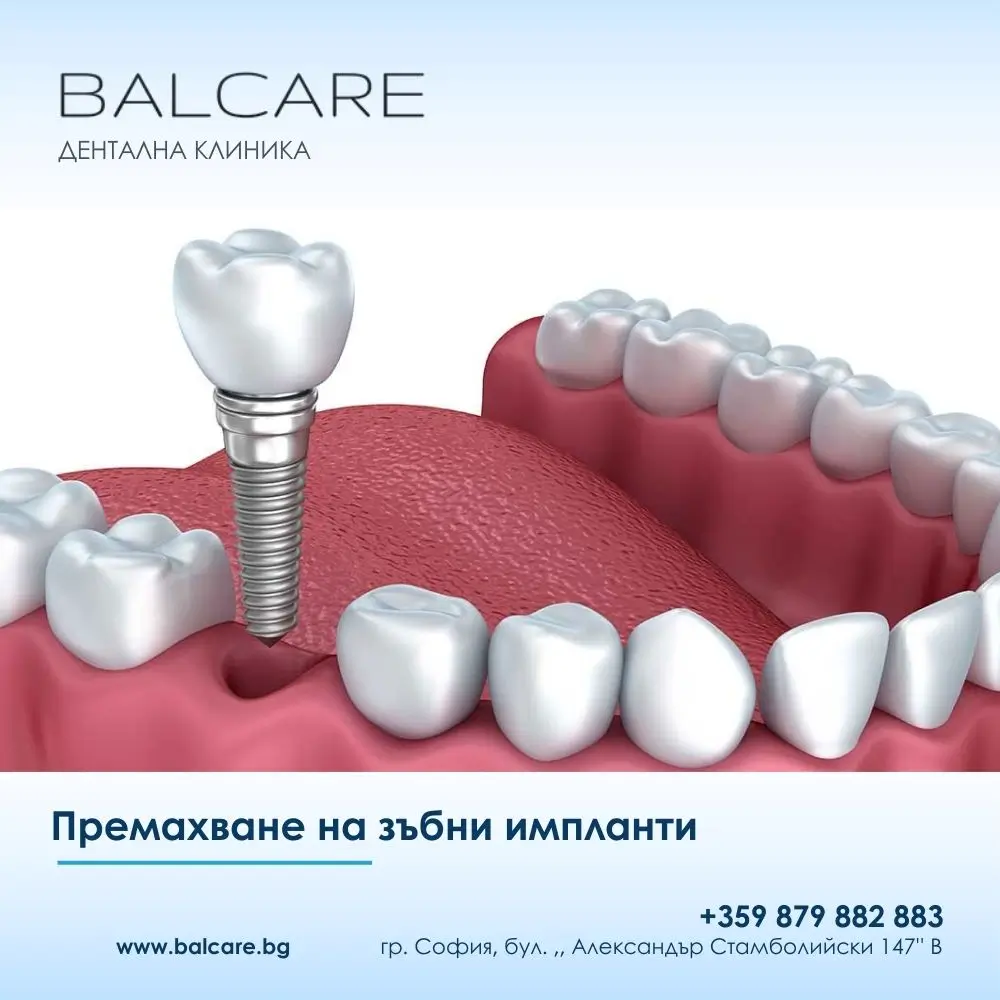
Dental Implant Removal
Dental implant removal is a complex oral surgical procedure that is performed only when there are clear medical indications.
Although dental implants are among the most reliable and long-lasting solutions for replacing missing teeth, complications can occasionally occur. These are most commonly associated with infection, failed osseointegration, inadequate treatment planning, mechanical problems, or systemic health conditions.
How Long Do Dental Implants Last?
Dental implants are designed as a long-term solution and, under favourable conditions, may remain functional for decades and sometimes for the rest of a patient’s life.
It is important to understand that an implant restoration consists of several components:
- the implant fixture, usually made of titanium;
- the abutment;
- the dental crown or prosthetic restoration.
The titanium implant fixture integrates with the jawbone and has excellent biocompatibility and mechanical durability.
With good oral hygiene and regular preventive care, an implant fixture may remain stable for 25–30 years or longer without significant functional changes.
The crown is exposed directly to chewing forces and therefore generally has a shorter lifespan. Depending on the restorative material, bite, oral habits, and maintenance, it may need to be replaced after approximately 10–15 years.
This does not necessarily represent an implant complication but may simply be part of the normal long-term maintenance of an implant-supported restoration.
The experience of the implant dentist also plays an important role.
Accurate treatment planning, correct three-dimensional implant positioning, and appropriate control of chewing forces can directly affect the long-term prognosis.
Even a high-quality implant system can become compromised if it is placed incorrectly or in unsuitable bone conditions.
General health should also be considered.
Factors such as:
- poorly controlled diabetes;
- osteoporosis;
- smoking;
- chronic poor oral hygiene;
may negatively affect implant prognosis.
In patients without significant risk factors, long-term implant success rates can exceed 95%.
Are Dental Implants Safe?
Dental implant treatment is considered one of the safest and most predictable procedures in modern dentistry when it is correctly planned and performed.
However, implant placement is a surgical procedure, which means that potential risks do exist.
One possible complication is infection, which may develop around the time of surgery or during the healing period.
Factors that may contribute include:
- inadequate oral hygiene;
- bacterial contamination;
- compromised healing;
- reduced immune response.
Another critical stage is osseointegration – the biological process through which the implant becomes integrated with the surrounding bone.
If osseointegration does not occur successfully, the implant may remain mobile and functionally unstable.
This is more likely in patients with:
- insufficient bone volume or quality;
- active inflammation;
- certain systemic conditions;
- smoking-related healing impairment.
There are also anatomical risks, such as injury to a nerve or involvement of the maxillary sinus.
These complications are uncommon and can be significantly reduced through careful diagnostics and 3D imaging before implant placement.
Despite these potential risks, dental implants offer important advantages compared with conventional bridges and removable dentures.
They:
- do not require preparation of neighbouring healthy teeth;
- provide excellent stability;
- help preserve the jawbone;
- restore chewing function effectively.
For appropriately selected patients and when treatment is carefully planned, dental implants remain one of the most predictable options for replacing missing teeth.
When Might a Dental Implant Need to Be Removed?
Dental implant removal is not common, but in certain situations it may become medically necessary.
One possible reason is incorrect treatment planning or implant positioning.
Errors in the interpretation of radiographic or 3D imaging may result in an implant being placed too close to:
- a nerve;
- the maxillary sinus;
- the root of a neighbouring tooth;
- another important anatomical structure.
This may cause persistent discomfort, altered sensation, or functional problems.
Another important reason is peri-implantitis – inflammation affecting the tissues around an implant and associated with progressive loss of supporting bone.
In advanced cases, the implant may lose stability and removal may become necessary.
Systemic conditions, blood-clotting disorders, active periodontal disease, and smoking may also increase the risk of complications.
Many implant-related problems can be reduced through appropriate treatment planning, regular professional monitoring, and good home care.
Reasons for Dental Implant Removal
| Reason for Removal | Approximate Share of Cases | When It Most Commonly Occurs | Professional Explanation |
|---|---|---|---|
| Failed osseointegration | 2–5% | First 3–6 months | The implant fails to integrate with the bone. Possible contributing factors include infection, insufficient bone quality or volume, smoking, or systemic conditions. |
| Early postoperative infection | 1–3% | Within the first 3 months | Bacterial infection develops during or shortly after surgery. If it cannot be controlled, implant failure may occur. |
| Peri-implantitis | 5–15% | After 2–10 years | Chronic inflammation around the implant associated with progressive bone loss. It is an important cause of late implant failure. |
| Incorrect planning or positioning | 2–4% | From 6 months to several years | The implant may be placed too close to a nerve, sinus, or neighbouring tooth and may cause pain, altered sensation, or functional problems. |
| Insufficient bone volume | 1–3% | Within 1–2 years | Initial stability may be achieved, but the surrounding bone may not provide adequate long-term support. |
| Mechanical complications | 1–2% | After 5–15 years | Fracture or loosening may occur, particularly in patients with bruxism or an unfavourable bite. Implant fixture fracture itself is relatively uncommon. |
| Periodontal disease | 3–6% | After 3–8 years | Active periodontal disease can increase the risk of inflammation and progressive bone loss around implants. |
| Systemic factors | 1–4% | At any stage | Poorly controlled systemic conditions may interfere with healing and long-term maintenance. |
| Lack of maintenance and preventive care | Up to 20%* | After 5+ years | *This is not necessarily a direct cause but may contribute significantly to many late complications. |
In many cases requiring implant removal, the problem is not caused by the implant material itself but by a combination of factors such as:
- inadequate oral hygiene;
- lack of regular preventive examinations;
- smoking;
- untreated periodontal disease.
Early implant failures occurring within the first six months are relatively uncommon and are usually associated with biological or surgical factors.
Late failures, which occur after several years, are more frequently associated with maintenance, inflammation, and biomechanical loading.
What Does Clinical Practice Show?
- Overall long-term implant success rates are approximately 94–97% at 10-year follow-up.
- Regular maintenance appointments may substantially reduce the risk of late peri-implant complications.
- Many implant-related problems can be managed more successfully when they are identified at an early stage.
How Is a Dental Implant Removed?
Dental implant removal is a carefully planned procedure whose main objective is to remove the implant while preserving as much surrounding bone as possible.
The process begins with a detailed clinical and radiographic examination.
The implant dentist must determine:
- why the implant needs to be removed;
- whether it is mobile;
- how strongly it is integrated with the bone;
- the amount of remaining supporting bone;
- the position of nearby anatomical structures.
This assessment determines the most appropriate removal technique.
Removal of a Mobile or Partially Integrated Implant
When an implant is mobile or only partially integrated, a minimally invasive approach may be possible.
Specialised implant removal instruments can be used to apply controlled reverse torque, allowing the implant to be carefully unscrewed from the bone.
This technique can help preserve a greater amount of the surrounding bone.
Removal of a Fully Osseointegrated Implant
If the implant is completely integrated with the bone, a more complex surgical approach may be necessary.
The procedure may include:
- administration of local anaesthesia;
- a small incision in the gum;
- exposure of the implant;
- controlled removal of a limited amount of surrounding bone;
- careful extraction of the implant;
- cleaning and assessment of the surgical site.
The exact technique depends on the implant position, degree of integration, and condition of the surrounding tissues.
What Happens After Dental Implant Removal?
After implant removal, the area is carefully assessed.
Postoperative care may include:
- appropriate oral hygiene;
- prescribed medication when indicated;
- pain control;
- regular follow-up appointments;
- monitoring of the healing process.
If significant bone loss is present, bone regeneration or bone grafting may be recommended.
The aim is to restore sufficient bone volume and create favourable conditions for future treatment.
In selected cases, another dental implant may later be placed after the bone and soft tissues have healed adequately.
Can a New Implant Be Placed After Removal?
In many cases, yes.
Whether another implant can be placed depends on:
- the reason the original implant failed;
- the amount of remaining bone;
- the presence or absence of infection;
- the condition of the gum tissue;
- the patient’s general health;
- the position required for the new implant.
Sometimes a new implant can be placed immediately after removal, but in other cases the area must first heal or undergo bone regeneration.
The treatment plan is always determined individually.
How Can the Risk of Dental Implant Removal Be Reduced?
| Risk Factor | What Increases the Risk | How the Risk Can Be Reduced | Expected Benefit |
|---|---|---|---|
| Poor oral hygiene | Plaque and bacterial accumulation around the implant | Brush twice daily and use interdental brushes, floss, or other recommended cleaning aids | Reduces the risk of peri-implant inflammation |
| Lack of preventive examinations | Inflammation and bone loss may remain undetected | Regular follow-up and professional cleaning | Allows complications to be identified earlier |
| Smoking | Reduced blood supply and delayed healing | Stop or significantly reduce smoking, especially during healing | Improves healing and implant prognosis |
| Poorly controlled diabetes | Delayed healing and increased susceptibility to infection | Maintain appropriate blood glucose control in coordination with the treating physician | Supports more predictable healing |
| Periodontal disease | Ongoing inflammation and bacterial burden | Treat periodontal disease before and after implant placement | Improves long-term stability |
| Bruxism | Excessive mechanical loading | Individual night guard when clinically indicated | May reduce the risk of loosening and mechanical complications |
| Incorrect bite | Uneven distribution of chewing forces | Occlusal analysis and adjustment where necessary | Helps reduce excessive implant loading |
| Insufficient bone volume | Reduced primary stability and support | Bone augmentation before or during implant placement when indicated | Improves the conditions for implant stability |
| Failure to follow postoperative instructions | Increased risk of infection and impaired healing | Follow all postoperative recommendations carefully | Helps reduce early complications |
| Lack of patient education | Incorrect home-care habits | Clear instructions on implant maintenance | Supports long-term implant health |
A dental implant does not usually “fail on its own”.
Complications are generally multifactorial and may result from a combination of biological, mechanical, behavioural, and systemic factors.
When the patient and implant team work together through good home care, regular professional maintenance, and early management of problems, the risk of implant loss can be significantly reduced.
Dental Implant Removal Is Sometimes Part of Responsible Treatment
Removing a dental implant should not automatically be viewed as a treatment failure.
In certain situations, it is the most appropriate medical decision to protect the surrounding bone, soft tissues, neighbouring teeth, or the patient’s overall health.
With timely diagnosis, an experienced implant dentist, and appropriate postoperative care, implant removal can usually be performed safely while preserving as much bone as possible.
When conditions allow, bone regeneration and future implant treatment can often restore the area again and provide a stable long-term result.
