


10 Reasons Why Dental Implants Are the Best Solution for Missing Teeth
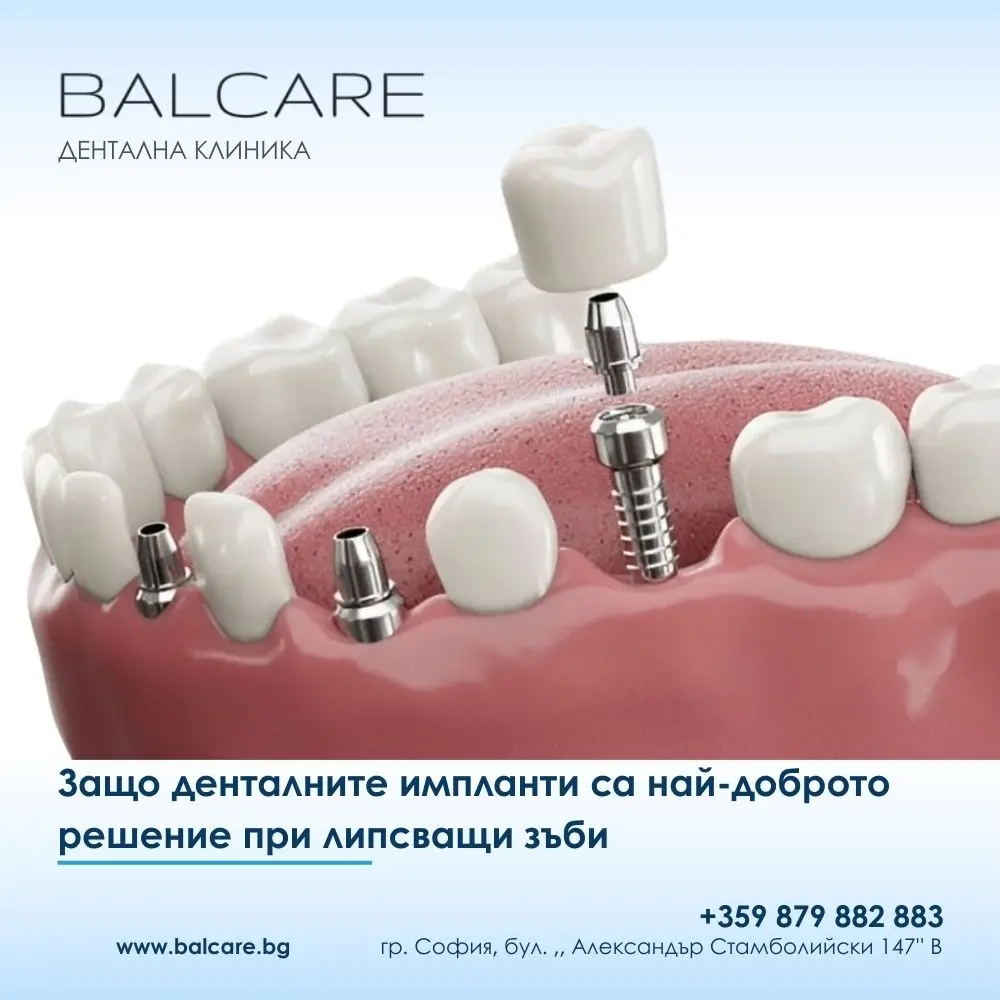
10 Reasons Why Dental Implants Are the Best Solution for Missing Teeth
Losing a tooth is never only an aesthetic issue. It affects the way you eat, speak, smile, and even how confident you feel.
In our clinical practice, we see every day how a single missing tooth can gradually lead to more serious functional and oral health changes.
Modern dentistry, however, offers a solution that comes remarkably close to a natural tooth – the dental implant.
Below, we explain clearly and professionally why dental implants are considered the gold standard for replacing missing teeth and why, in many cases, they offer important advantages over alternative solutions.
1. Dental Implants Provide a Long-Term and Stable Solution
A dental implant is designed to become a permanent part of your mouth.
Once the implant has integrated with the surrounding bone, it functions as an artificial tooth root and provides excellent stability.
With good oral hygiene and regular preventive examinations, dental implants can last for decades and, in many cases, for the rest of the patient’s life.
This makes them significantly more reliable in the long term than removable dentures or dental bridges, which may require replacement over time.
2. The Closest Feeling to a Natural Tooth
Dental implants do not only look like natural teeth – they can also feel remarkably similar.
Patients often report that after an adaptation period, they forget which tooth has been replaced by an implant.
The crown placed on the implant is individually designed according to:
- shape;
- colour;
- size;
- the surrounding natural teeth.
This allows the restoration to blend naturally into the smile and restore normal function during eating and speaking.
3. Preservation of Healthy Adjacent Teeth
One of the major advantages of dental implants is that they do not require preparation of the neighbouring teeth.
With a conventional dental bridge, healthy adjacent teeth usually need to be reduced so that they can support the restoration.
A dental implant is an independent structure.
This means that neighbouring natural teeth can remain intact, which is an important advantage for long-term oral health.
4. Greater Freedom When Eating
Dental implants allow patients to eat with confidence.
They provide excellent stability and chewing function that can closely resemble that of natural teeth.
Foods such as:
- meat;
- nuts;
- fresh fruit;
- firmer foods;
can generally be eaten with considerably greater confidence than with an unstable removable prosthesis.
Restoring effective chewing not only improves quality of life but may also support digestion by allowing food to be properly broken down before swallowing.
5. Clear and Confident Speech
Missing teeth may affect pronunciation and speech.
Certain sounds may become less clear, which can make patients feel self-conscious when communicating.
Dental implants restore the anatomy of the missing tooth area and can support clear and confident speech without the fear of a removable prosthesis shifting or becoming displaced.
6. Helping Preserve the Jawbone
After a tooth is lost, the bone in that area gradually begins to resorb.
This is a natural biological process that, over time, may contribute to changes in facial contours and a more aged appearance.
A dental implant transfers functional forces to the surrounding bone in a way that is similar to a natural tooth root.
This helps maintain bone volume in the area and supports the natural contours of the jaw and face.
7. Straightforward Maintenance and Oral Hygiene
Dental implants do not require complicated daily maintenance.
They are cared for in a way similar to natural teeth, including:
- regular brushing;
- interdental cleaning or flossing;
- professional preventive care.
Unlike removable dentures, they do not need to be removed, fixed in place with adhesive, or soaked in special solutions.
This makes everyday maintenance considerably more convenient for many patients.
8. A Very High Success Rate
Modern clinical studies report dental implant success rates of more than 95%.
This makes implant treatment one of the most predictable procedures in modern dentistry.
Success depends on several important factors, including:
- accurate treatment planning;
- the experience of the implant dentist;
- appropriate surgical technique;
- good oral hygiene;
- regular follow-up care.
9. An Individual and Precise Treatment Approach
There is no universal implant solution that is suitable for every patient.
Each person has different:
- bone anatomy;
- bite;
- soft tissues;
- general health;
- aesthetic requirements.
Implant treatment is therefore individually planned from the selection and positioning of the implant to the design of the final crown.
This allows the clinician to optimise both the functional and aesthetic result.
10. Greater Confidence and Improved Quality of Life
A complete and healthy-looking smile can change the way people feel about themselves.
Many patients become more confident, more comfortable in social situations, and more relaxed in their everyday lives.
Dental implants do more than simply replace a missing tooth.
They can restore comfort, confidence, function, and quality of life.
Dental Implants Compared with Other Tooth-Replacement Options
Dental Implants vs Removable Dentures
Removable dentures may move during eating or speaking, cause discomfort, and require a period of adaptation.
Dental implants are fixed and stable and do not create the same sensation of a removable foreign object in the mouth.
Dental Implants vs Dental Bridges
Dental bridges generally require preparation of neighbouring teeth and do not prevent bone loss in the area of the missing tooth.
Dental implants can help preserve both the surrounding bone and the healthy adjacent teeth.
Comparison of Dental Implants, Bridges and Removable Dentures
| Criterion | Dental Implants | Dental Bridges | Removable Dentures |
|---|---|---|---|
| Durability | 20+ years, often lifelong | 7–12 years | 5–8 years |
| Stability | Fixed in the bone and highly stable | Fixed, but dependent on adjacent teeth | May move during function |
| Effect on neighbouring teeth | No preparation required | Healthy teeth generally need preparation | No direct preparation, but they may be subjected to additional loading |
| Bone preservation | Yes – helps stimulate and maintain the bone | No | No |
| Comfort | Very high, close to the feeling of a natural tooth | Good, but not completely natural | May cause discomfort |
| Aesthetics | Excellent, highly natural appearance | Good | Generally lower |
| Maintenance | Similar to natural teeth | Requires careful cleaning around and beneath the bridge | Must be removed and cleaned |
| Chewing efficiency | 90–100% | 60–80% | 30–50% |
| Confidence and sense of security | Very high | Moderate | Often lower |
How Should You Make Your Decision?
The comparison clearly demonstrates why dental implants are widely considered a gold-standard option for replacing missing teeth.
They do not simply restore the appearance of the smile. They also provide an important biological benefit that other options cannot offer to the same extent – supporting preservation of the jawbone.
With dental bridges, the main compromise is the preparation of healthy neighbouring teeth.
Over the long term, this may lead to the need for additional dental treatment and higher costs.
Although bridges may initially appear to be a faster solution, they do not stop bone resorption beneath the missing tooth.
Removable dentures are often selected because of financial considerations, but they may require ongoing adaptation.
Patients may report difficulties with:
- eating;
- speaking;
- social situations;
- stability and comfort.
These factors can directly affect quality of life.
Which Option Is Most Suitable for You?
The most appropriate treatment always depends on the individual patient.
Important factors include:
- available bone volume;
- general health;
- oral hygiene;
- lifestyle habits;
- bite and functional loading;
- individual expectations.
However, when implant treatment is clinically possible, dental implants can provide an excellent combination of stability, aesthetics, function, and long-term reliability.
From a clinical perspective, investing in a dental implant may also prove more economical in the long term because it can reduce the need for frequent adjustments, replacements, and additional interventions.
Professional Advice from an Implant Dentist
If you are considering several tooth-replacement options, do not make the decision based only on price or speed of treatment.
The more important question is how the chosen solution will affect your oral health 10, 15, or 20 years from now.
A consultation with a dental implant specialist can provide you with a clear, personalised treatment plan and a realistic understanding of the most appropriate option for your individual case.
If you are considering treatment, professional consultation is the first and most important step.
Accurate diagnosis and an individual approach are the foundation of a successful and long-lasting result.
A smile can change your life – and often, it begins with the right decision.
