


What Is Pulpitis and How Is It Treated?
What Is Pulpitis and How Is It Treated?
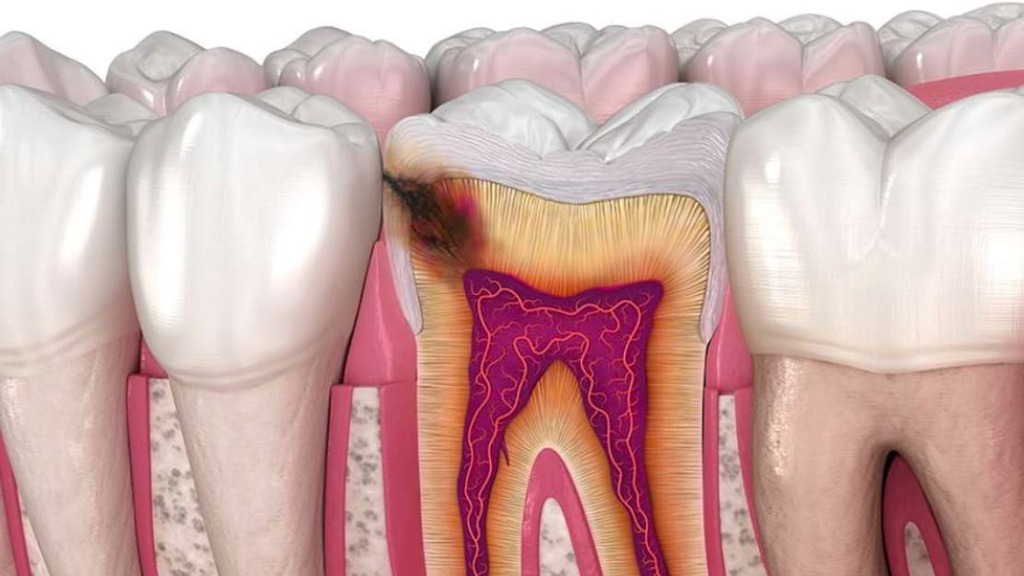
Pulpitis is inflammation of the dental pulp – the soft tissue inside the tooth that contains small blood vessels, connective tissue, and nerve fibres.
The most common cause is deep dental caries. As decay progresses through the enamel and dentine, bacteria and their by-products can reach or irritate the pulp, triggering inflammation. One of the most characteristic symptoms is tooth pain, although the intensity and duration depend on the stage of the condition.
Pulpitis may be reversible or irreversible and can present with acute or chronic symptoms.
If left untreated, advanced pulp inflammation or infection may lead to complications such as apical periodontitis, dental abscess, and eventually loss of the tooth.
Timely endodontic treatment can often preserve the natural tooth and prevent the infection from spreading to the surrounding tissues.
What Causes Pulpitis?
Pulpitis can develop for several reasons:
- Dental caries – the most common cause. As decay progresses deeper into the tooth, bacterial irritation may reach the pulp.
- Dental trauma – blows, falls, fractures, or cracks may damage or expose the pulp.
- Extensive dental procedures – repeated or very deep restorative treatment can sometimes irritate the pulp.
- Defective or leaking fillings – bacterial leakage around an old restoration may allow decay to develop underneath it.
- Cracked teeth – microscopic or visible cracks can allow bacteria to reach deeper tooth structures.
- Advanced periodontal disease – in selected cases, infection affecting the supporting tissues may communicate with the pulp through accessory canals or the root apex.
- Repeated dental treatment on the same tooth – multiple interventions may increase pulpal irritation.
Factors that may indirectly increase the risk of dental disease include:
- poorly controlled systemic conditions that affect healing;
- reduced immune function;
- frequent consumption of fermentable carbohydrates and sugars;
- inadequate oral hygiene.
Types of Pulpitis
Reversible Pulpitis
Reversible pulpitis occurs when the inflammation is mild and the dental pulp still has the ability to recover once the source of irritation is removed.
It may develop as a result of:
- early or moderate dental caries;
- exposed dentine;
- a recently placed deep filling;
- thermal or mechanical irritation;
- temporary irritation caused by dental materials or treatment.
Typical symptoms include:
- mild to moderate sensitivity;
- pain triggered by cold, sweet, or occasionally hot foods and drinks;
- discomfort that disappears quickly after the stimulus is removed.
The pain usually lasts only a few seconds and does not occur spontaneously.
When diagnosed and treated early, the pulp can often remain healthy and vital.
Irreversible Pulpitis
In irreversible pulpitis, the inflammation has progressed to a stage at which the pulp can no longer recover predictably.
This most commonly occurs when bacteria associated with deep caries have reached the pulp.
Symptoms may include:
- spontaneous toothache;
- intense or throbbing pain;
- pain that wakes the patient at night;
- prolonged sensitivity to hot or cold;
- pain that continues after the stimulus has been removed;
- pain that may be difficult to localise.
The intensity of symptoms can vary considerably.
A tooth with irreversible pulpitis generally requires endodontic treatment if it is to be preserved.
Acute and Chronic Forms of Pulpal Disease
Acute Pulpitis
Acute pulpitis may develop rapidly and can cause severe, throbbing pain.
The pain may:
- occur spontaneously;
- become more noticeable at night;
- persist for a prolonged period;
- be aggravated by temperature changes.
Suppurative Pulpal Inflammation
When advanced bacterial infection is present, purulent inflammation may develop within or around the affected tissues.
Symptoms can become more intense, and treatment should not be delayed.
Depending on the condition of the tooth, root canal treatment or another appropriate endodontic procedure may be necessary.
Chronic Pulpitis
Chronic inflammation may progress more slowly and sometimes produces less obvious symptoms.
Clinical forms may include:
- chronic fibrous pulpitis – long-standing inflammatory changes within the pulp;
- hyperplastic pulpitis – excessive growth of inflamed pulp tissue, sometimes known as a pulp polyp;
- pulp necrosis – death of the pulp tissue, which may subsequently lead to infection around the root.
A necrotic pulp does not always cause severe pain, which is why the absence of pain does not necessarily mean that the tooth is healthy.
How Is Reversible Pulpitis Treated?
The aim of treating reversible pulpitis is to remove the cause of irritation and preserve the vitality of the dental pulp.
Treatment may include:
Removal of Dental Caries and Tooth Restoration
The affected carious tissue is carefully removed to prevent further bacterial progression towards the pulp.
The tooth is then restored with an appropriate filling material to provide an effective seal.
Protective or Bioactive Materials
When decay has extended close to the pulp, biocompatible materials may be placed to protect the pulp and support healing.
The objective is to preserve the vitality of the tooth and avoid root canal treatment whenever this is biologically possible.
Clinical Follow-Up
The tooth may be monitored over time to assess:
- sensitivity;
- spontaneous pain;
- discomfort during chewing;
- vitality;
- changes in the tissues surrounding the root.
Follow-up X-rays may be recommended when clinically indicated.
The goal is to maintain the tooth as a vital, functional natural tooth.
How Is Irreversible Pulpitis Treated?
When the pulp is irreversibly inflamed, treatment usually involves root canal therapy.
During endodontic treatment:
- Local anaesthesia is administered.
- The pulp chamber is accessed.
- Inflamed or infected pulp tissue is removed from the pulp chamber and root canals.
- The root canal system is mechanically cleaned and shaped.
- Antimicrobial irrigation is used to disinfect the canals.
- The canals are filled and sealed with an appropriate endodontic material.
- The tooth is restored to protect it from reinfection and fracture.
Depending on how much natural tooth structure remains, the final restoration may be a filling, an onlay, or a dental crown.
When Is Extraction Necessary?
Extraction is usually considered only when the tooth cannot be predictably restored or preserved.
Possible reasons include:
- extensive destruction of the crown;
- severe fracture;
- insufficient remaining tooth structure;
- advanced periodontal involvement;
- other conditions that make predictable restoration impossible.
When a tooth must be extracted, replacement options may include:
- a dental implant;
- a dental bridge;
- a removable prosthetic restoration.
Whenever possible, preserving the natural tooth remains the preferred treatment objective.
Symptoms of Pulpitis
Symptoms can vary depending on the degree of inflammation.
Possible signs include:
- Sensitivity to hot or cold – discomfort may be sharp and sudden.
- Lingering pain – pain may continue even after the stimulus has been removed.
- Spontaneous toothache – pain occurs without eating, drinking, or touching the tooth.
- Night-time pain – symptoms may become more noticeable when lying down.
- Pain during biting or chewing – particularly if inflammation has extended towards the tissues surrounding the root.
- Gum swelling – may occur when infection has spread beyond the pulp.
- Tenderness around the affected tooth.
- A change in tooth colour in some cases of pulp necrosis.
Persistent or severe dental pain should always be assessed by a dentist as soon as possible.
How Is Pulpitis Diagnosed?
Correct diagnosis is essential because different pulpal conditions require different treatment.
The dentist may perform:
- a clinical examination;
- assessment of the existing fillings and caries;
- percussion and palpation tests;
- cold or other pulp sensitivity tests;
- bite testing when a crack is suspected;
- dental radiographs;
- additional imaging when clinically necessary.
The diagnosis is based on the combination of symptoms, clinical tests, and radiographic findings rather than on pain alone.
Pulpitis in Children
Pulpitis in children requires a specialised approach, particularly when primary teeth are involved.
Decay may progress relatively quickly in baby teeth because:
- the enamel and dentine are thinner;
- the pulp chamber is relatively large;
- the distance between the tooth surface and the pulp is shorter.
Parents should therefore pay attention even to mild complaints such as:
- sensitivity while eating;
- avoiding food on one side;
- waking at night because of toothache;
- swelling around a tooth;
- sudden reluctance to brush a particular area.
Treatment depends on the child’s age, the affected tooth, the condition of the pulp, and how long the primary tooth is expected to remain in the mouth.
Possible treatment options may include pulp therapy, restoration, or extraction when the tooth cannot be preserved.
Possible Complications of Untreated Pulpitis
If advanced pulp inflammation or infection is not treated, it may progress beyond the tooth.
Possible complications include:
- Apical periodontitis – inflammation of the tissues around the root tip.
- Dental abscess – accumulation of pus associated with infection.
- Facial swelling – infection may spread into the surrounding soft tissues.
- Osteomyelitis – a rare but serious infection of the jawbone.
- Systemic spread of infection – uncommon, but potentially serious in advanced cases.
Prompt treatment significantly reduces the risk of these complications.
Possible Complications During Endodontic Treatment
Root canal treatment is a well-established procedure, but like any dental intervention, complications may occasionally occur.
These may include:
- instrument separation within a root canal;
- root or chamber perforation;
- difficulty locating complex or additional canals;
- extrusion of irrigating or filling material beyond the root apex;
- persistent infection requiring retreatment.
The use of magnification, dental microscopy, modern imaging, electronic apex measurement, and contemporary endodontic instruments can improve precision and treatment predictability.
What Can You Do for Toothache Before Seeing a Dentist?
If you cannot attend a dental appointment immediately, temporary measures may help control symptoms.
You may:
- take an appropriate pain-relieving medicine such as ibuprofen or paracetamol, provided it is suitable for you and taken according to the instructions;
- keep the area clean;
- rinse gently with warm salt water;
- avoid very hot, very cold, sweet, or acidic foods and drinks;
- avoid chewing on the affected tooth.
Important: These measures may temporarily reduce discomfort, but they do not treat pulpitis.
Antibiotics alone also do not remove inflamed or infected pulp tissue and are not a substitute for appropriate dental treatment.
Why Choose BalCare for Pulpitis and Root Canal Treatment?
At BalCare Dental Clinic, treatment may include:
- Modern diagnostic and treatment technology – including digital imaging and microscope-assisted endodontics;
- Experienced clinicians – with extensive experience in endodontic diagnosis and treatment;
- Individual treatment planning – adapted to the condition of each tooth and the needs of the patient;
- Precision and patient comfort – treatment is carried out under appropriate anaesthesia and controlled clinical conditions;
- Focus on preserving the natural tooth whenever this is clinically possible.
Timely diagnosis can often make the difference between a tooth that can be restored and one that eventually becomes impossible to preserve.
If you experience persistent toothache, prolonged sensitivity to hot or cold, pain at night, or swelling around a tooth, arrange a dental examination at BalCare Dental Clinic in Sofia.
Early diagnosis and appropriate endodontic treatment can help preserve the natural tooth and prevent more serious complications.
