


Tooth Discolouration
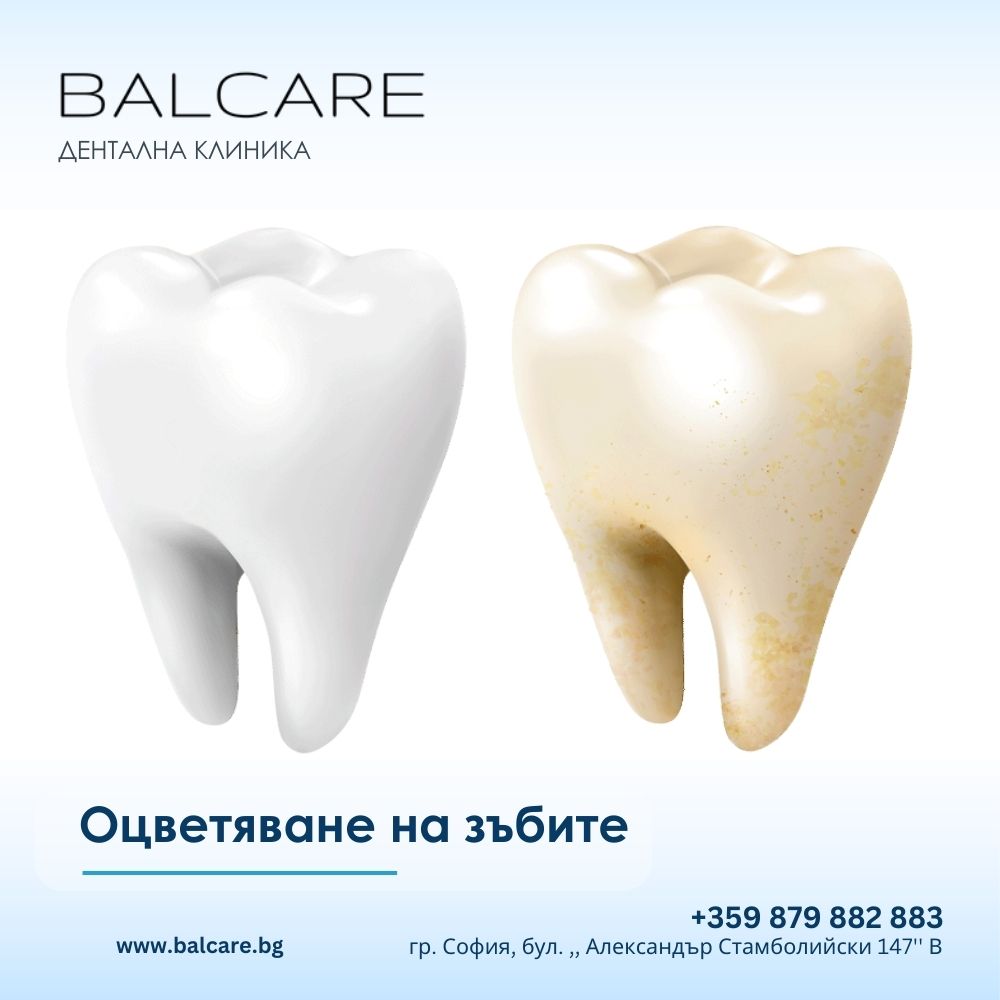
Tooth Discolouration – Why Do Teeth Become Darker and What Can Be Done?
Changes in tooth colour are common and can affect people of all ages. Whether the problem involves mild staining or more noticeable darkening, tooth discolouration can affect both the appearance of the smile and a person’s confidence.
In this article, we explain the main causes of tooth discolouration, how different types of staining can be recognised, and what treatment and prevention options are available.
Types of Tooth Discolouration
Tooth discolouration is generally divided into two main types:
Extrinsic Tooth Discolouration
Extrinsic staining affects the outer surface of the tooth enamel and is usually caused by external factors.
Common causes include:
- Staining foods and drinks – coffee, tea, red wine, cola, berries and other strongly pigmented foods;
- Smoking and tobacco use – nicotine and tar can produce yellow or brown staining;
- Poor oral hygiene – plaque and tartar accumulation can trap pigments;
- Prolonged use of chlorhexidine mouthwash – this may cause surface staining when used for extended periods.
Extrinsic stains are often easier to remove because they mainly affect the surface of the teeth.
Intrinsic Tooth Discolouration
Intrinsic discolouration develops within the tooth structure and may be more difficult to treat.
Possible causes include:
- Dental trauma – bleeding within the pulp or pulp necrosis may cause a tooth to become darker;
- Tetracycline antibiotics during tooth development – these may produce characteristic greyish or brown discolouration;
- Excessive fluoride exposure during tooth development – this may result in dental fluorosis;
- Developmental conditions affecting enamel or dentine, such as amelogenesis imperfecta or dentinogenesis imperfecta.
What Are the Main Causes of Tooth Discolouration?
Diet and Drinking Habits
One of the most common causes of surface staining is the regular consumption of strongly pigmented foods and drinks.
These contain chromogens – pigment-producing compounds that can adhere to the tooth surface.
Common examples include:
- black tea;
- coffee;
- red wine;
- dark-coloured fizzy drinks;
- soy sauce;
- tomato-based sauces;
- berries and other deeply coloured foods.
A useful habit is to rinse the mouth with water after consuming strongly pigmented foods or drinks.
If brushing is needed after acidic foods or beverages, it may be advisable to wait for a short period before brushing rather than brushing immediately.
Poor Oral Hygiene
Inadequate brushing and interdental cleaning can result in the accumulation of dental plaque and tartar.
Pigments from food, drinks, and tobacco can easily become trapped within these deposits, making the teeth appear more yellow or dark.
Professional cleaning can often significantly improve this type of staining.
Smoking and Tobacco Use
Tobacco contains substances that can adhere strongly to the tooth surface.
Nicotine itself is colourless, but when it reacts with oxygen it can produce yellowish staining. Tar and other tobacco by-products may further contribute to brown or dark deposits.
These stains can be difficult to remove with ordinary brushing alone.
Medications and Dental Fluorosis
Certain medications may affect tooth colour when exposure occurs during tooth development.
Tetracycline antibiotics are a well-known example and may cause intrinsic grey, yellow, or brown discolouration.
Excessive fluoride intake while the permanent teeth are developing may result in dental fluorosis, which can appear as:
- fine white lines;
- opaque white areas;
- mottled enamel;
- brown staining in more pronounced cases.
Ageing
As we age, the enamel naturally becomes thinner.
This allows more of the underlying dentine to show through. Dentine has a naturally warmer, more yellowish colour, which is why teeth often appear darker with age.
This is a normal biological process rather than a dental disease.
How Can Tooth Discolouration Be Treated?
The most appropriate treatment depends on whether the staining is extrinsic or intrinsic and on the underlying cause.
Professional Dental Cleaning
Professional cleaning is one of the most effective ways to remove surface staining and tartar.
Depending on the individual case, the procedure may include:
- ultrasonic scaling;
- professional polishing;
- removal of plaque and surface deposits.
Professional cleaning is particularly effective for stains caused by coffee, tea, tobacco, and plaque accumulation.
Teeth Whitening
Professional teeth whitening can lighten the natural colour of the teeth and reduce many types of discolouration.
Whitening may be performed:
In-Office Teeth Whitening
The whitening procedure is carried out in the dental clinic under professional supervision.
Dentist-Supervised Home Whitening
Custom-made whitening trays are prepared for the patient and used at home with a professional whitening gel according to the dentist’s instructions.
It is important to understand that not every type of tooth discolouration responds equally well to whitening.
For example, severe tetracycline staining or certain developmental enamel defects may require a different aesthetic approach.
Aesthetic Restorations
When intrinsic discolouration cannot be adequately improved through whitening, restorative treatment may be considered.
Possible options include:
- direct composite veneers or bonding;
- ceramic veneers;
- dental crowns in cases where greater structural restoration is also required.
The most appropriate option depends on the condition of the tooth, the extent of discolouration, and the desired aesthetic result.
How Can Tooth Discolouration Be Prevented?
Several everyday habits can help reduce staining:
- brush at least twice a day with fluoride toothpaste;
- clean between the teeth with dental floss or interdental brushes;
- limit frequent consumption of highly pigmented foods and drinks;
- rinse the mouth with water after coffee, tea, red wine, or other staining beverages;
- avoid smoking and tobacco products;
- attend regular preventive dental examinations and professional cleaning appointments.
Frequently Asked Questions
1. Can a Tooth Become Darker After Root Canal Treatment?
Yes.
A root canal-treated tooth may sometimes become darker over time.
This may be related to changes within the tooth structure, previous bleeding inside the pulp chamber, or remnants of materials within the tooth.
Depending on the individual case, treatment may include internal whitening or an aesthetic restoration.
2. What Is Dental Fluorosis and Why Does It Cause Spots?
Dental fluorosis develops when excessive fluoride exposure occurs while the teeth are forming.
It affects enamel development and may result in changes ranging from very subtle white markings to more noticeable opaque or brown areas.
The appropriate treatment depends on the severity of the appearance.
3. Does Teeth Whitening Damage the Teeth?
When whitening is performed correctly and under dental supervision, it is generally considered safe.
Temporary tooth sensitivity or gum irritation may occur in some patients.
Problems are more likely when whitening products are overused, used incorrectly, or obtained from unregulated sources.
4. How Often Can Teeth Be Whitened?
There is no single interval that is appropriate for every patient.
How often whitening can be repeated depends on:
- the condition of the enamel;
- the whitening method used;
- the degree of staining;
- tooth sensitivity;
- lifestyle habits.
For this reason, the need for repeat whitening should be assessed individually by a dentist.
When Should Tooth Discolouration Be Examined by a Dentist?
Not every change in tooth colour is purely cosmetic.
A dental examination is particularly important when:
- only one tooth suddenly becomes darker;
- the change occurs after trauma;
- the tooth is painful or sensitive;
- the discolouration is accompanied by swelling;
- white or brown enamel defects appear in a child;
- the colour change progresses rapidly.
A single darkened tooth, for example, may indicate changes within the dental pulp and should be assessed before cosmetic treatment is considered.
Choosing the Right Treatment for Tooth Discolouration
Tooth discolouration can have many different causes – from everyday habits such as drinking coffee or smoking to developmental changes, medications, trauma, or natural ageing.
Identifying the cause is the most important step in choosing the correct treatment.
Surface stains may often be removed with professional cleaning, while deeper discolouration may require whitening, bonding, veneers, or another aesthetic treatment.
If you notice a change in the colour of your teeth, a professional dental assessment can help determine whether the problem is simply cosmetic or whether there is an underlying dental condition that requires treatment.
