


Red Light Therapy for Bruxism
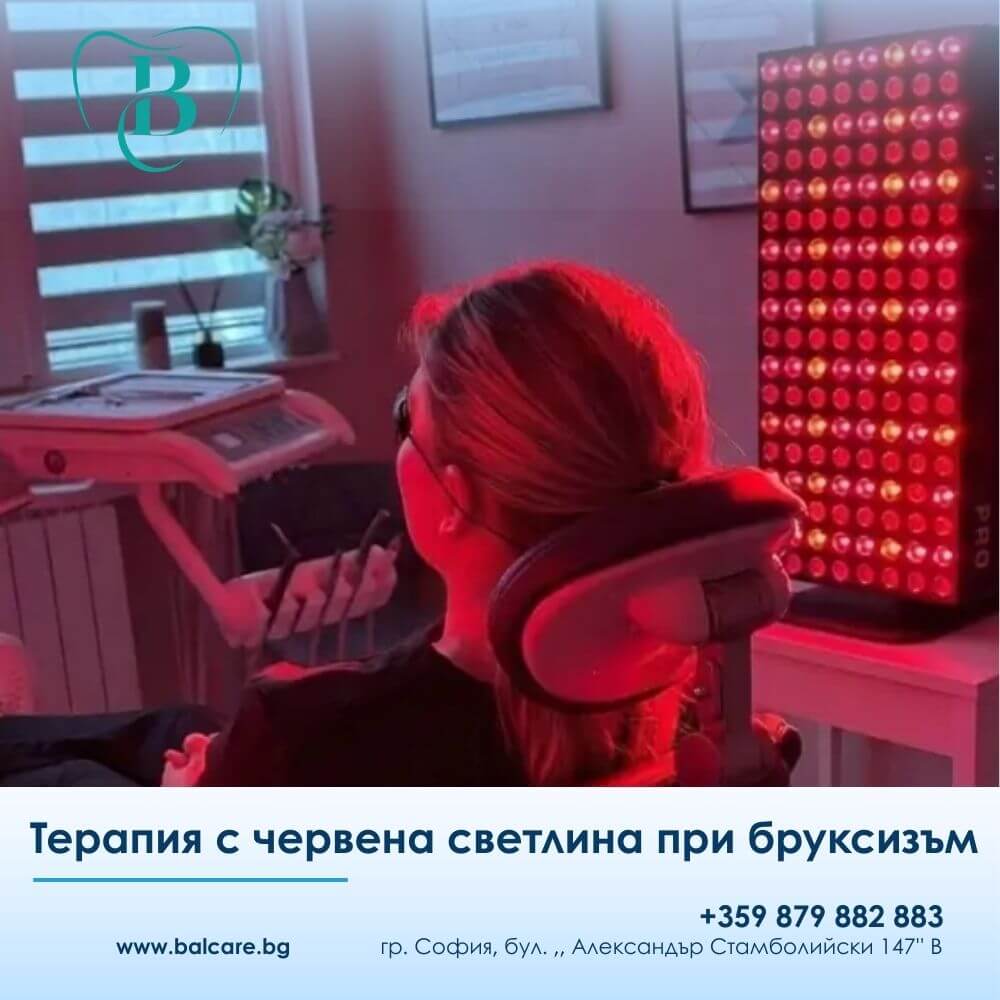
Red Light Therapy for Bruxism – A Modern Approach to Relieving Pain and Muscle Tension
Teeth grinding is not simply a habit. It is a condition that often goes unnoticed until the first symptoms appear – jaw tension, pain, or morning headaches.
In clinical practice, we often see patients who ignore these signs for a long time until the discomfort becomes persistent.
Bruxism is, in fact, a complex condition. The masticatory muscles remain under increased tension, the tissues are repeatedly overloaded, local circulation may be affected, and inflammatory processes may gradually develop.
These mechanisms can contribute to symptoms such as jaw tightness, pain when opening the mouth, tooth sensitivity, and frequent headaches.
If the condition is not addressed in time, the symptoms may become more pronounced and develop into a chronic problem.
How Red Light Therapy Affects Pain
Red Light Therapy, also known as photobiomodulation, is a modern non-invasive method that works at the cellular level.
The light penetrates the tissues without damaging them and stimulates cellular processes, including mitochondrial activity – an important part of cellular energy production.
As a result, cellular energy production may increase, supporting natural recovery processes.
This may contribute to:
- reducing inflammation;
- relieving pain;
- improving local circulation;
- supporting tissue recovery.
This mechanism is one of the reasons photobiomodulation is used in different areas of dental medicine, including the management of oral pain, inflammatory conditions, and muscular tension.
What Results Can Patients Expect?
Clinical observations and current research suggest that Red Light Therapy may help reduce pain in the jaw and oral region, particularly in patients with temporomandibular disorders that may coexist with bruxism.
In addition to pain relief, the therapy may also influence inflammatory processes within the tissues.
This can be particularly relevant in conditions involving irritated soft tissues, gingival inflammation, or minor tissue trauma associated with prolonged clenching.
Another important potential benefit is support for tissue recovery.
Stimulation of cellular activity may assist soft-tissue regeneration and reduce discomfort following certain dental procedures.
For this reason, the method can be valuable not only in patients with bruxism but also as part of a broader therapeutic approach.
The effect on the patient’s general well-being should not be underestimated either.
Oral and jaw pain can interfere with sleep, eating, and everyday comfort. When the pain is brought under better control, both physical comfort and overall well-being may improve.
How Does It Help Specifically with Bruxism?
In patients with bruxism, Red Light Therapy may have a beneficial effect on the muscles and temporomandibular joint region.
It may help:
- relax the masticatory muscles;
- reduce morning stiffness;
- relieve tension in the temple area.
At the same time, improved local circulation may support recovery after prolonged muscular overload.
It is important to understand that Red Light Therapy does not eliminate the behaviour of clenching or grinding itself.
Its role is primarily to reduce associated symptoms and improve day-to-day comfort.
How Is the Therapy Performed?
The procedure is completely non-invasive and comfortable for the patient.
The light source is directed towards the jaw area or other affected regions, with one session usually lasting approximately 10 to 20 minutes.
The treatment is painless.
Patients most commonly describe a mild sensation of warmth and gradual relaxation of the muscles, which can make the procedure feel calming and comfortable.
How Long Does It Take to Notice an Effect?
The effects of therapy are generally cumulative rather than immediate.
Initial improvement may be noticed after several sessions, while a more noticeable effect is often achieved after a series of approximately 6 to 10 treatments.
In chronic conditions, maintenance sessions may sometimes be recommended to help preserve the achieved result.
An Important Point Patients Should Understand
Red Light Therapy should not be considered a stand-alone solution.
The best results are generally achieved when it forms part of a comprehensive treatment plan.
In practice, this may mean combining the therapy with:
- a custom-made night-time occlusal splint to protect the teeth;
- stress management;
- bite correction when clinically indicated.
Bruxism and the associated pain in the mouth and jaw should not simply be accepted as normal.
They are signs of functional overload that deserve proper assessment and a professional treatment approach.
Red Light Therapy is a modern, non-invasive therapeutic method that supports the body’s natural recovery processes.
It may help reduce pain, relax overloaded muscles, and improve quality of life – without medication and without invasive procedures.
When appropriately indicated and combined with other treatment methods, it can become an important component in the successful management of symptoms associated with bruxism.
