


Bone Augmentation
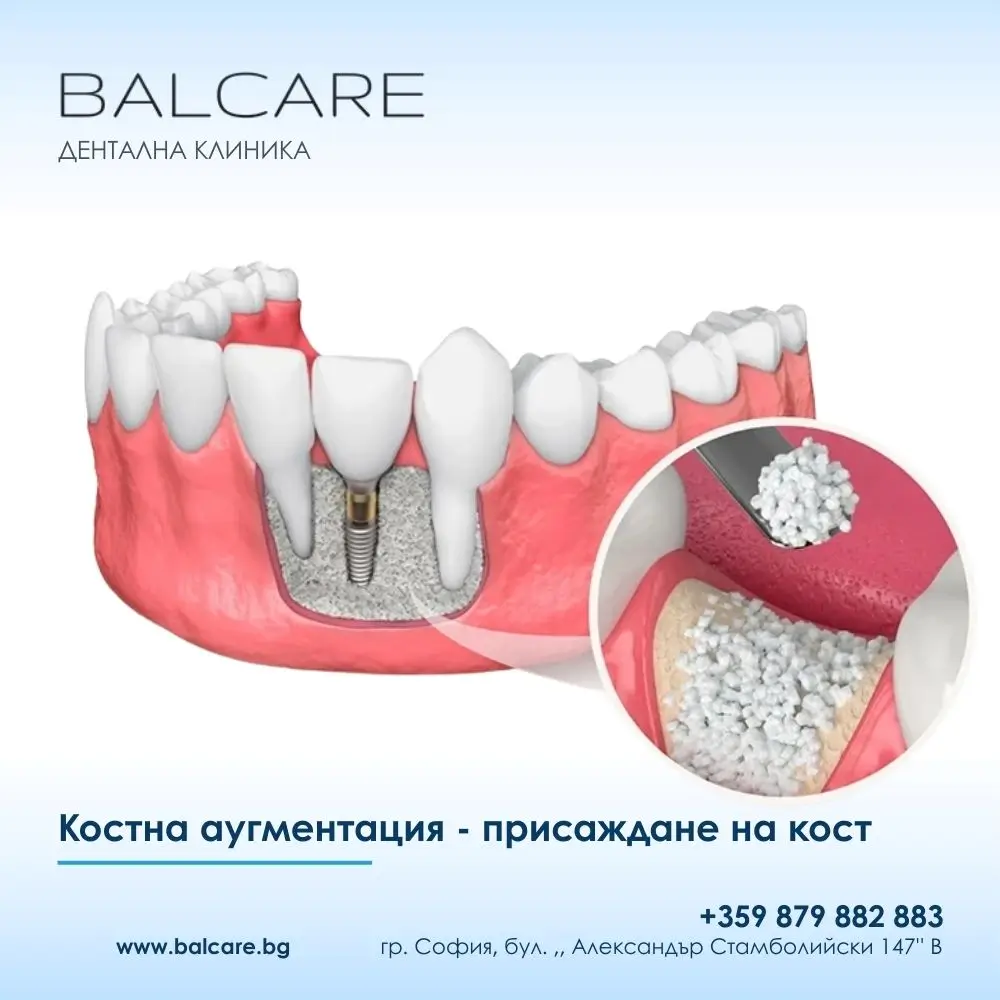
Bone Augmentation: What Is Bone Grafting in Implant Dentistry?
Bone augmentation is a surgical procedure used to restore lost jawbone volume following tooth loss, trauma, or advanced periodontal disease. It restores the natural anatomy and creates a stable foundation for dental implants.
In this article, you will find clear answers to the most important questions: when bone augmentation is necessary, why the bone resorbs, how the procedure is performed step by step, what materials are used, and what results patients can expect.
We will also discuss success rates, recovery time, possible risks, cost, and the conditions required for successful implant placement. All explanations are presented in professional but easy-to-understand language, supported by clinical data and established practice.
What Is Bone Augmentation?
Bone augmentation is a procedure used to restore lost bone volume when the jaw does not have sufficient density, width, or height to provide stable support for a dental implant.
After a tooth extraction, the surrounding bone naturally begins to resorb.
This means that the jaw gradually loses height and width, while the facial tissues may also change visually, resulting in indentations or a slightly “sunken” appearance.
In patients who have been without teeth for a prolonged period, bone resorption may reach 40–60% within the first two years, according to clinical observations in implant dentistry.
To restore the possibility of stable implant placement, the missing bone volume can be reconstructed using autogenous, allogeneic, xenogeneic, or synthetic grafting materials.
Who Needs Bone Augmentation?
Bone augmentation is necessary in patients who do not have sufficient jawbone volume or density to support stable dental implant placement.
The procedure can be particularly important for patients who want:
- permanent fixed teeth instead of removable dentures;
- preservation or restoration of the natural facial contours;
- long-term implant stability;
- to reduce the risk of implant failure.
When bone volume is insufficient, an implant does not have adequate biological support.
This may increase the risk of micromovement, peri-implant complications, and implant failure.
Bone augmentation restores the anatomical foundation and allows implants to be placed in an optimal position for both aesthetics and function.
Why Does Bone Resorb After Tooth Loss?
Bone atrophy is a natural biological process that begins when the jawbone no longer receives functional stimulation from the tooth root.
After tooth extraction:
- blood supply in the area may decrease;
- bone cells receive less functional stimulation;
- biological resorption begins and progresses over time.
Additional factors that can accelerate bone loss include:
- periodontal inflammation, where infection destroys supporting bone;
- trauma;
- osteoporosis;
- traumatic or complicated tooth extraction;
- abnormal function or loading of neighbouring teeth.
In some patients, up to 25% of bone volume may be lost within the first six months.
The longer implant treatment is postponed, the more likely it is that bone augmentation will be required.
What Happens When There Is Insufficient Gum Tissue and Bone?
Insufficient gingival tissue and inadequate bone volume can lead to functional and aesthetic problems that may progress over time.
When there is insufficient gum tissue:
- tooth roots may become exposed;
- sensitivity and discomfort may develop;
- the risk of caries and infection may increase;
- implant stability and soft-tissue support may be compromised;
- the smile may appear uneven or the teeth may look visually “longer”.
When the tissues do not adequately protect the implant or natural tooth, bacterial penetration becomes easier, which may contribute to inflammation and recession.
For this reason, some patients require a combined procedure involving bone augmentation and soft-tissue grafting.
What Is the Success Rate of Bone Augmentation?
Bone augmentation has a high success rate when it is properly planned and performed.
Reported success rates in implant dentistry range from approximately 92% to over 98%, depending on the technique and grafting material used.
Favourable results are often associated with:
- autogenous bone grafts taken from the patient;
- PRGF/PRF technologies;
- good stabilisation of the grafted area;
- avoiding smoking during the healing period.
The key factors for success include accurate diagnostics, sufficient graft volume, and stable surgical technique.
The surgeon’s experience is also critical, as correct graft modelling, membrane management, and stabilisation can directly influence the final result.
How Does Bone Augmentation Affect the Success of Dental Implants?
Bone augmentation plays an important role in the long-term success of dental implants because it provides the necessary mechanical and biological support.
When an implant is placed in healthy and stable bone:
- primary stability is improved;
- osseointegration can proceed more predictably;
- the risk of peri-implant complications may be reduced;
- the final crown can be positioned more favourably from both a functional and aesthetic perspective.
Clinical results indicate that implants placed after successfully performed bone augmentation can achieve long-term outcomes comparable to implants placed in native bone.
How Long Does the Procedure Take?
Bone augmentation is usually performed in a single surgical session.
The procedure generally takes approximately 40 to 90 minutes, depending on the complexity and the amount of bone that needs to be reconstructed.
The procedure may be performed under:
- local anaesthesia;
or
- sedation, allowing the patient to remain calm and comfortable during the treatment.
When clinical conditions allow, the dental implant may also be placed during the same surgical session.
Stages of Bone Augmentation
1. Initial Consultation
The consultation includes a detailed clinical assessment, CBCT imaging, and planning of the exact amount of bone required for future implant placement.
Using three-dimensional imaging, the clinician evaluates:
- bone width and height;
- the distance to anatomical structures such as the sinuses and nerves;
- the optimal position for implant placement.
The appropriate type of graft material is then selected – autogenous, allogeneic, xenogeneic, or synthetic.
2. Surgical Procedure
The procedure may include:
- local anaesthesia or sedation;
- a small and precise incision;
- preparation of the treatment area;
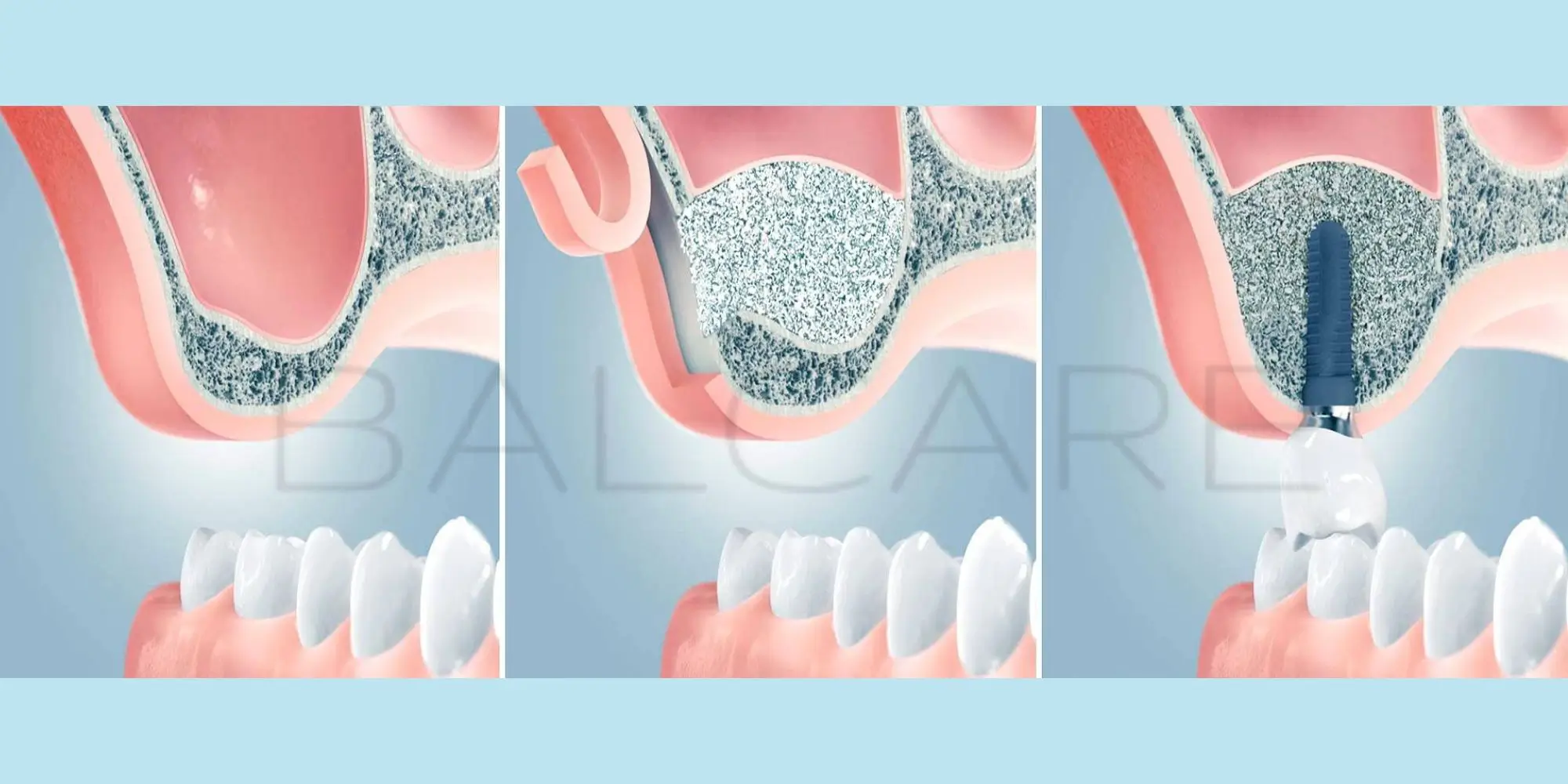
- placement of the bone graft material;
- stabilisation and coverage with a membrane;
- suturing.
When possible, the implant may be placed during the same operation.
This can reduce the number of procedures and shorten the overall treatment process.
3. Healing and Osseointegration
Healing generally takes approximately 4–6 months.
During this period, the grafting material integrates with the patient’s natural bone and becomes part of the newly reconstructed area.
The patient may receive medication to control discomfort and reduce the risk of infection.
Following postoperative instructions and maintaining excellent oral hygiene are essential for successful healing.
Dental Implants and When Bone Grafting Is Necessary
Dental implants are one of the most advanced methods for restoring partially or completely missing teeth.
Their success depends on stable anchorage within the jawbone, which allows natural function, aesthetics, and long-term durability.
For an implant to be placed successfully, sufficient healthy and dense bone is required.
When the available bone volume is inadequate, the implant may not achieve the necessary stability, making treatment more difficult or, in some cases, impossible without additional reconstruction.
In such cases, bone volume is restored using a specialised surgical procedure commonly known as a bone graft.
This reconstructs the missing bone and creates a suitable foundation for future implant placement.
Indications for Bone Grafting
Bone augmentation is recommended when the patient does not have sufficient hard tissue to support a dental implant.
Bone deficiency may result from natural biological processes, previous disease, or trauma.
The most common indications include:
- Long-term tooth loss following extraction – when the tooth root is no longer present, the bone in the area gradually resorbs and becomes thinner.
- Removal of a cystic lesion – surgical removal of a cyst may leave a bone defect that requires reconstruction.
- Periodontitis – chronic inflammation may destroy supporting bone and leave insufficient volume for implant placement.
When bone volume has been reduced horizontally, vertically, or in both dimensions, bone grafting may become a necessary stage before implant treatment.
Contraindications to Bone Augmentation
Although bone grafting is a well-established surgical procedure, there are situations in which it may not be recommended or should be postponed until the patient’s health has stabilised.
Potential contraindications include:
- Pregnancy – elective surgical procedures are generally postponed unless treatment is urgent.
- Current chemotherapy or radiotherapy – these treatments may significantly reduce the regenerative capacity of tissues.
- Breastfeeding – certain medications used around the surgical procedure may not be recommended during lactation.
- Blood-clotting disorders – these may increase the risk of postoperative bleeding.
- Acute or uncontrolled chronic sinusitis – particularly relevant for procedures involving the upper jaw.
- Poorly controlled type 1 diabetes – healing may be slower and the risk of complications may be higher.
- Acute psychiatric illness – stabilisation may be required before elective surgical treatment.
- Active tuberculosis – the condition requires appropriate medical management before elective reconstructive surgery.
- Tumour in the maxillary region – oncological assessment and treatment must take priority before reconstructive procedures are considered.
Every patient requires a detailed medical history and diagnostic assessment to determine whether the procedure can be performed safely and to create an individual treatment plan.
What Should You Do During Recovery?
Appropriate postoperative care supports smooth and predictable healing.
Patients are generally advised to:
- rest during the first few days;
- avoid strenuous physical activity;
- eat soft, lukewarm foods;
- drink sufficient fluids;
- maintain oral hygiene without aggressive rinsing;
- avoid smoking for at least 2–4 weeks.
Smoking reduces blood supply to the tissues and increases the risk of impaired graft integration.
Possible Reactions After Bone Augmentation
Normal temporary symptoms during the first few days may include:
- mild pain;
- swelling;
- a feeling of tension;
- minimal bleeding.
These symptoms usually subside quickly and are not necessarily a sign of a complication.
Serious reactions such as infection are uncommon but require prompt clinical assessment.
What Materials and Technologies Are Used in Bone Augmentation?
Several main types of bone grafting materials may be used:
- Autogenous bone – bone taken from the patient; offers excellent biocompatibility.
- Allogeneic bone – processed human donor bone.
- Xenogeneic bone – bone substitute of animal origin, commonly bovine.
- Alloplastic materials – synthetic bioactive bone substitutes.
Additional technologies may include:
PRGF / PRF (Plasma Rich in Growth Factors / Platelet-Rich Fibrin) – autologous blood-derived preparations used to support healing, reduce postoperative swelling, and assist tissue integration.
Bone augmentation is one of the most important procedures in modern implant dentistry and may be essential for achieving stable and long-lasting dental implant treatment.
It restores the lost anatomy, supports proper bite function, and contributes to the aesthetic outcome of the final restoration.
If you are planning implant treatment, it is important to understand that bone augmentation may be a key stage on the path towards a stable, fixed, and functional dental reconstruction.
