


Braces or Clear Aligners: Which Orthodontic Treatment Is Right for You?
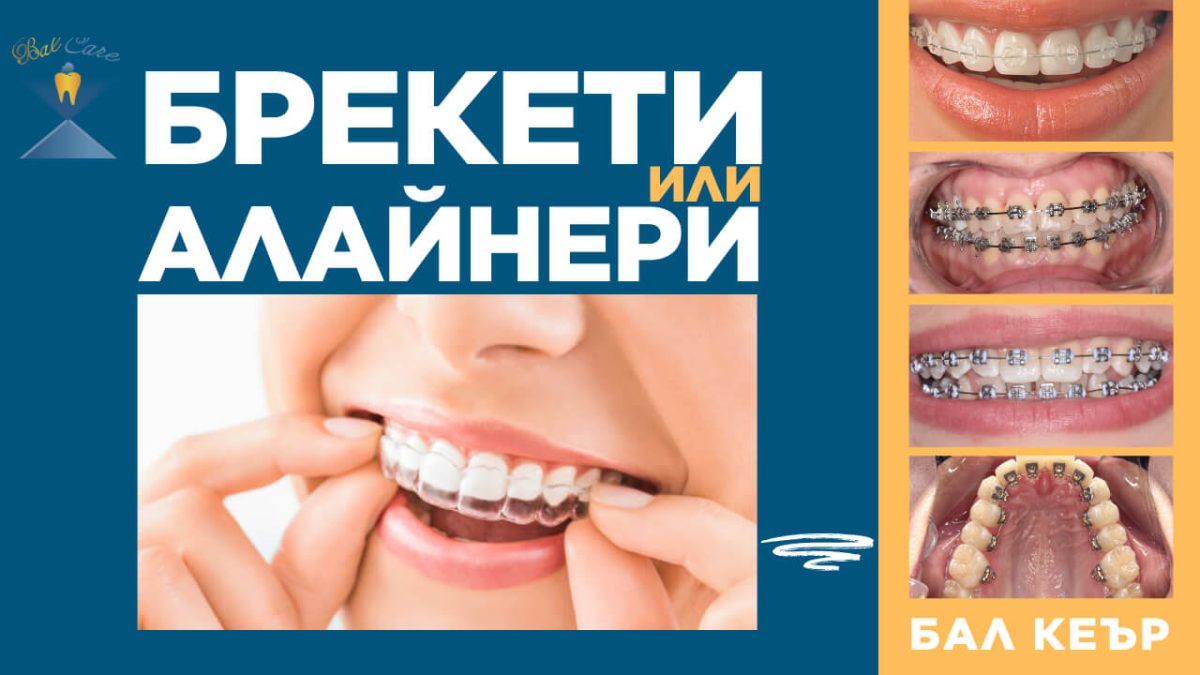
Braces or Clear Aligners: Which Orthodontic Treatment Is Right for You?
If you have crooked or misaligned teeth and are considering orthodontic treatment, you may be wondering:
Which type of braces or clear aligners will provide the best result for my case?
Modern orthodontics offers several effective treatment options, but each has its own advantages, limitations, and indications.
The right choice depends not only on appearance or price, but also on:
- the type of orthodontic problem;
- the complexity of the required tooth movements;
- your bite;
- your age and growth stage;
- lifestyle;
- oral hygiene;
- ability to follow treatment instructions.
In this article, we look at the most commonly used types of braces and clear aligners and explain what to consider when choosing between them.
You can also watch our video with Dr Trajko Balabanov from BalCare Dental Clinic, who discusses the different orthodontic treatment options from a clinical perspective.
Metal Braces – A Reliable Orthodontic Treatment
Traditional metal braces remain one of the most widely used and versatile orthodontic treatment methods.
They consist of brackets bonded to the teeth and an orthodontic archwire that applies controlled forces to gradually move the teeth.
Advantages of Metal Braces
- Suitable for a wide range of orthodontic problems.
- Can provide precise control over complex tooth movements.
- Strong and durable.
- Usually more affordable than aesthetic or lingual systems.
- Do not depend on the patient remembering to wear the appliance.
Disadvantages of Metal Braces
- Clearly visible when smiling.
- May cause temporary discomfort or irritation, particularly after placement or adjustment.
- Require careful oral hygiene.
- Certain hard or sticky foods need to be avoided to reduce the risk of damaging brackets and wires.
Metal braces can be an excellent option for both teenagers and adults, particularly when precise control of tooth movement is required.
Ceramic Braces – A More Discreet Fixed Option
Ceramic braces work in a similar way to traditional metal braces, but the brackets are made from tooth-coloured or translucent material.
This makes them less noticeable.
Advantages of Ceramic Braces
- More discreet than metal braces.
- Suitable for many moderate and complex orthodontic cases.
- Provide the advantages of fixed orthodontic treatment without requiring daily patient compliance with wearing time.
Disadvantages of Ceramic Braces
- Usually more expensive than metal braces.
- Ceramic brackets can be more brittle than metal brackets.
- Elastomeric components around some systems may become discoloured over time.
- Careful cleaning is essential to maintain their aesthetic appearance.
Ceramic braces are often chosen by patients who want the control of fixed orthodontic treatment with a less visible appearance.
Self-Ligating Braces – A Different Bracket Design
Self-ligating braces use brackets with an integrated mechanism that holds the orthodontic wire in place.
Traditional systems often use elastic or metal ligatures to secure the wire.
Potential Advantages
- No elastic ligatures are required around the bracket.
- Certain clinical procedures during appointments may be more convenient.
- Cleaning around some self-ligating bracket designs may be easier.
- They can be used for many different orthodontic problems.
Important to Know
Self-ligating braces are sometimes promoted as being substantially faster or more comfortable than traditional braces.
However, the bracket system alone does not determine treatment duration or treatment success.
The overall result depends much more on:
- the diagnosis;
- type of tooth movements required;
- biological response;
- orthodontic treatment plan;
- patient cooperation.
Self-ligating braces are therefore one option among several rather than automatically a superior choice for every patient.
Lingual Braces – Braces Hidden Behind the Teeth
Lingual braces are placed on the inner surfaces of the teeth, making them far less visible from the outside.
Advantages of Lingual Braces
- Highly discreet.
- Provide fixed orthodontic treatment without visible brackets on the front surfaces of the teeth.
- Can be used to manage a variety of orthodontic problems in appropriately selected patients.
Disadvantages of Lingual Braces
- Usually more expensive than conventional braces.
- More technically demanding to place and adjust.
- Cleaning can be more difficult.
- The tongue may feel irritated initially.
- Temporary changes in speech may occur while the patient adapts.
Lingual braces may be particularly appealing to adults who want fixed orthodontic treatment with maximum discretion.
Clear Aligners – A Removable and Discreet Option
Clear aligners are a series of transparent removable trays individually designed to move the teeth step by step.
Each aligner applies controlled forces, and the trays are changed according to the treatment schedule prescribed by the orthodontist.
Advantages of Clear Aligners
- Nearly invisible when worn.
- Removable for eating.
- Easier access for brushing and interdental cleaning.
- No brackets or wires.
- Often comfortable and convenient for everyday life.
Disadvantages of Clear Aligners
- Require excellent patient compliance.
- Generally need to be worn approximately 20–22 hours per day, depending on the treatment plan.
- Must be removed when eating and when drinking anything other than water.
- Some complex cases may require additional techniques, attachments, elastics, or alternative treatment approaches.
- They may be more expensive than traditional metal braces.
Modern aligner therapy can treat considerably more complex cases than in the past, but it is not automatically suitable for every patient.
A detailed orthodontic assessment is essential.
Are Braces Better Than Aligners?
Neither treatment is universally “better”.
The most appropriate option depends on the individual orthodontic problem.
Braces May Be Particularly Suitable When:
- complex tooth movements are required;
- there is significant crowding;
- tooth rotations are pronounced;
- impacted teeth need to be guided into position;
- continuous fixed control is preferable;
- the patient may find it difficult to wear removable appliances consistently.
Clear Aligners May Be Particularly Suitable When:
- discretion is a major priority;
- the patient is highly motivated and compliant;
- easier oral hygiene is important;
- the orthodontic movements can be achieved predictably with an aligner system;
- the patient prefers a removable appliance.
In some cases, the orthodontist may also combine different techniques to achieve the desired result.
How Do You Choose the Best Orthodontic Option?
Several factors should be considered.
1. Complexity of the Orthodontic Problem
The first step is understanding exactly what needs to be corrected.
Treatment may involve:
- tooth alignment;
- crowding;
- spacing;
- crossbite;
- deep bite;
- open bite;
- tooth rotation;
- jaw relationship;
- impacted teeth.
Some problems can be successfully treated with either braces or aligners, while others may be more predictable with a particular technique.
2. Aesthetic Preferences
If you want the treatment to be as discreet as possible, possible options may include:
- clear aligners;
- ceramic braces;
- lingual braces.
Metal braces are more visible but remain highly effective and reliable.
3. Budget
Treatment cost depends on:
- the appliance;
- complexity of the case;
- expected treatment duration;
- additional procedures that may be necessary.
Metal braces are often one of the more economical fixed options, while lingual systems and certain aligner treatments may involve higher costs.
4. Lifestyle and Patient Cooperation
Clear aligners offer considerable flexibility, but that flexibility comes with responsibility.
If aligners are removed frequently or not worn for the prescribed amount of time, treatment may not progress as planned.
Fixed braces, on the other hand, work continuously because they remain attached to the teeth.
5. Oral Hygiene
Both braces and aligners require excellent oral hygiene.
Fixed braces require additional attention because plaque can accumulate around brackets and wires.
Aligners make brushing and flossing easier because they can be removed, but teeth should be cleaned before the aligners are placed back into the mouth.
6. Treatment Duration
There is no universally fastest orthodontic appliance.
Treatment duration depends mainly on:
- the complexity of the case;
- biological tooth movement;
- treatment goals;
- patient cooperation;
- attendance at appointments.
Choosing an appliance simply because it is advertised as “faster” is therefore not the best way to make an orthodontic decision.
Frequently Asked Questions
How Long Does Treatment with Braces or Aligners Take?
The duration varies considerably.
Treatment with fixed braces commonly lasts approximately 18–36 months, while clear-aligner treatment may range from several months for simpler cases to 12–24 months or longer for comprehensive treatment.
These are only general estimates.
An individual orthodontic examination is necessary before treatment time can be predicted more accurately.
Is Wearing Braces or Aligners Painful?
Orthodontic treatment should not normally cause significant pain.
Patients may experience:
- pressure;
- tenderness;
- temporary sensitivity;
- mild discomfort after adjustments or when changing to a new aligner.
These sensations usually decrease as the mouth adapts.
Which Option Is Best for Adults?
There is no single best orthodontic appliance for all adults.
Common choices include:
- metal braces;
- ceramic braces;
- lingual braces;
- clear aligners.
The decision should be based on the clinical problem as well as aesthetic preferences and lifestyle.
How Should I Care for My Braces?
Good oral hygiene is essential.
Patients with braces should:
- brush carefully around brackets and wires;
- clean between the teeth daily;
- use interdental brushes where appropriate;
- avoid very hard and sticky foods that can damage the appliance;
- attend regular orthodontic and dental appointments.
Your orthodontist may recommend additional hygiene products according to your individual needs.
Do Clear Aligners Need to Be Worn All Day?
In most treatment protocols, aligners need to be worn for approximately 20–22 hours per day.
They are generally removed only for:
- eating;
- drinking beverages other than water;
- brushing and flossing.
Consistent wearing time is one of the most important factors in successful aligner treatment.
Tips for More Predictable Orthodontic Treatment
You cannot safely make teeth move faster simply by applying more force.
However, you can help treatment progress according to plan by following a few important rules:
- follow your orthodontist’s instructions carefully;
- wear aligners or elastics for the prescribed amount of time;
- maintain excellent oral hygiene;
- attend scheduled appointments;
- avoid damaging brackets or appliances;
- contact your orthodontist if a bracket breaks or an aligner no longer fits properly;
- wear retainers as prescribed after active treatment is completed.
Retainers Are Part of Orthodontic Treatment
Whether your teeth are corrected with braces or aligners, the result needs to be maintained after active treatment.
Retainers help stabilise the teeth in their new positions and reduce the risk of orthodontic relapse.
Depending on the individual case, the orthodontist may recommend:
- a fixed retainer;
- a removable retainer;
- or a combination of both.
Long-term retention is often necessary to maintain tooth alignment.
Why a Professional Orthodontic Assessment Matters
Choosing between braces and aligners should not be based only on appearance, advertising, or treatment price.
A comprehensive orthodontic assessment may include:
- examination of the teeth and bite;
- assessment of facial and jaw relationships;
- photographs;
- digital intraoral scanning;
- radiographic examination when necessary;
- evaluation of oral health;
- discussion of treatment goals.
Only after these factors have been evaluated can the orthodontist recommend the treatment method that offers the most predictable result for the individual patient.
Conclusion
Modern orthodontics offers several effective ways to correct crooked teeth and bite problems.
Metal braces, ceramic braces, self-ligating systems, lingual braces, and clear aligners all have their place in orthodontic treatment.
The most important question is not:
“Which appliance is the best?”
but rather:
“Which treatment approach is best suited to my individual orthodontic problem?”
At BalCare Dental Clinic, orthodontic treatment is individually planned according to the patient’s bite, tooth position, treatment goals, lifestyle, and clinical needs.
If you are considering braces or clear aligners, an orthodontic assessment can help you understand the available options and choose the most appropriate treatment approach.
📞 Book an orthodontic consultation at BalCare Dental Clinic: +359879882883
Watch Our Video with Dr Trajko Balabanov
You can also watch our video with Dr Trajko Balabanov from BalCare Dental Clinic, where he discusses the different types of braces and aligners and explains the factors that influence the choice of orthodontic treatment.
Smile with confidence – because the best orthodontic treatment is the one that is correctly planned for you.
